Today's
EarthStation1.com 15% (Or More!) Off Commemorative Memorial Title:
Japan: A Cherry Blossom By Many Other Names MP4 Video Download DVD
Today, July 26, 2026
July 26: World Tofu Day: -- Tofu is a
plant-based alternative to meat that is manufactured from
soybeans. Tofu has seen a surge in popularity as more people
switch to a plant-based diet. For vegans and vegetarians, it is
particularly appreciated and enjoyed because they can avoid eating
meat, but still get some much-needed protein from it. Even if you
are not a vegetarian, but you're curious about tofu, today is a
good day to give it a try. The Eastern Asian diet, which relies
heavily on tofu, is a staple in many countries around the world.
As important as dairy products like milk and cheese are to regular
eaters, tofu is an indispensable part of every vegetarian diet. It
may be newer in the West, but tofu dates back to 900 A.D. in
Japan, where it is most popular. Tofu, or bean curd in English,
has several different names in the Chinese and Japanese languages.
The term 'tofu' wasn't coined until the 1800s when English
translations of cookbooks began to appear. In the 1970s, as the
meat replacement gained widespread acceptance in the West,
cookbooks began to use 'tofu' as an official designation. People
who prefer to adopt a vegetarian or vegan diet have grown to rely
on tofu. It has become a classic meal and a nutritious alternative
for them. Each Japanese province has its distinct method of
producing tofu, reflected in the wide range of ways it is
consumed. When soybean production is executed well, it is enjoyed
by a large number of people. Tofu is one of the most versatile and
nutritious foods available worldwide. National Tofu Day seeks to
highlight the numerous ways tofu has influenced people around the
world while giving them the required nutrients. On Sale Until
Midnight Tonight PT!
https://store.earthstation1.com/japan-a-cherry-blossom-by-many-other-names-mp4-video-download-dvd.html
Today's
EarthStation1.com 15% (Or More!) Off Commemorative Memorial Title:
Song Of The South (1946) Feature Film DVD, Video Download, USB
Drive
Today, July 26, 2026
July 26: National Aunt And Uncle
Day/Auntie's Day: -- Aunts and uncles are unique parts of our
family; they can be like a second set of parents, or great friends
you happen to be related to. Often, they've watched us grow up,
and are full of stories about things we did in our youth we might
not even remember. July is a great month for a cookout, or outdoor
activities. Call up your aunts and uncles and ask them to come out
and celebrate their special place in your life. It's unclear
exactly when National Aunt and Uncle Day was started, but it's
safe to say people have been celebrating their parent's siblings
for a long time. The word aunt is derived from the French word for
the same familial relation, tante. Uncle is also derived from a
french word - oncle. Both of these words start even further back
in history, stemming from the Latin words amita and avunculus
respectively. Aunts and uncles have different roles in many human
societies. For example, in the Ashanti tribe of Ghana, aunts and
uncles are given free reign to discipline and raise their
siblings' children. They're essentially a second set of parents,
who you real parents trust the most because, well, they were
raised together. In many Polynesian cultures, anyone older than
you may be addressed as aunt or uncle as a term of respect and
endearment. Aunts and uncles also occupy a place of importance in
modern pop culture, with many famous examples across television,
literature, and film. Often, these characters, such as Uncle Phil
from The Fresh Prince, act as parental figures for their niece,
nephews, and their own children, signifying their position as wise
and trusted members of the family. On Sale Until Midnight Tonight
PT!
https://store.earthstation1.com/song-of-the-south-dvd-1946-movie-and-animation-fea1946.html
Today's
EarthStation1.com 15% (Or More!) Off Commemorative Memorial Title:
United Nations Documentaries Set: 2 MP4 Downloads Or 2 DVDs
Today, July 26, 2026
July 26: One Voice Day: -- A day that
revolves around the world joining together and forgetting all the
differences of race, religion, and boundaries. Yes, this day is
all about committing to the cause of world peace so our future
generations never have to experience war. The essence of the day
lies in making a promise of peace and unity by reciting the
Universal Peace Covenant. To celebrate this day to the fullest,
understand why peace is important and how it can make the world a
better place. With the recent violent events, wars, and
instability taking place around the world, it has become extremely
important to bring together like-minded individuals who can call
for global peace and unity. A lot of bias, hate, and
misinformation exists in today's world. Active efforts are
required to highlight what people from around the globe have in
common and One Voice Day is the perfect day to do so. One Voice
Day is celebrated every year on July 26. It was created in 1996
and the idea was to read the Universal Peace Covenant every year
on December 31, however, the date was later changed to July 26.
The document is important for people of all ages because it
defines how we all can think peacefully and how an attitude of
peace can be adopted in the forever-changing world. It is during
this time that all the different voices in the world become one.
The Universal Peace Covenant was created by students in the School
of Metaphysics. The concept of peace, however, has existed for
centuries. For instance, peace is the core teaching of various
great religions such as Buddhism, Hinduism, Islam, Judaism, and
Christianity. In fact, peace was taught by renowned leaders that
are still recognized on a global scale. This includes individuals
like Gandhi and Martin Luther King. Gandhi also introduced a
theory called Satyagraha, according to which it was contradictory
to use violence to obtain peace. While many countries still
struggle for peace, Sweden and Switzerland are an example of how
the task can be achieved if enough effort is put into the cause by
a country's leaders. Peace and neutrality among states have been
observed in Sweden since 1814. Similarly, Switzerland has had an
official policy of neutrality since 1815. Moreover, the modern
world has also introduced the academic field of Peace and Conflict
Studies in order to reduce the chances of war. Will our future
generations reap the fruits of our efforts in working towards
achieving global peace? This is a global event where people of
various nationalities collaborate to promote world peace. In
today's world, it has become crucial to participate in activities
to prevent violence and hatred against different nations and
communities. World peace can be easily achieved when different
countries support each other and respect one another's customs,
beliefs, and religious practices. With continuous technological
advancements in the field of science and technology, it has become
easier to develop powerful weapons and ammunition, which increases
the risks of war and conflict between countries. The main idea
behind celebrating One Voice Day is to unite different countries
on a single platform by reading the Universal Peace Covenant.
Thousands of people participate in this global event and pledge to
promote world peace. The peace covenant can be read in different
languages and people of all ages read the covenant, irrespective
of their race and social backgrounds. Change is inevitable. No one
can predict the future. Therefore, the best way to live your life
to the fullest is by spending every moment showing love and caring
for others. No matter how tough your life may be, simply knowing
how to respect the ideas, beliefs, and customs of other
communities can make a huge difference. On Sale Until Midnight
Tonight PT!
https://store.earthstation1.com/united-nations-documentaries-set-dvd-mp4-download-usb-driv4.html
Today's
EarthStation1.com 15% (Or More!) Off Commemorative Memorial Title:
TV Commercials: The Classics Vol. 8 DVD, MP4 Download, USB Flash
Drive
Today, July 26, 2026
July 26, 1775: The Colonial History Of
The United States: Postal Systems: Postal Systems Of The United
States: The History Of The Postal Systems Of The United States:
Postal Organizations: Postal Organizations Of The United States:
The United States Post Office (USPO): -- The office that would
later become the United States Post Office Department (USPOD; also
known as the Post Office or U.S. Mail; February 20, 1792 - July 1,
1971) is established by decree of the Second Continental Congress
as The United States Post Office (USPO), headed for a brief time
by Benjamin Franklin. It is noteworthy that a full year before the
American Declaration Of Independence referred to "The United
States Of America" that the Second Continental Congress, who
still referred to its members as "the Thirteen Colonies",
used the phrase "United States" in the name "United
States Post Office". The United States Post Office Department
that followed it was itself the predecessor of today's United
States Postal Service (USPS), a department of The Cabinet Of The
United States, and headed by The Postmaster General. The Postal
Service Act, signed by U.S. president George Washington on
February 20, 1792, established the department. Postmaster General
John McLean, in office from 1823 to 1829, was the first to call it
the Post Office Department rather than just the "Post
Office." The organization received a boost in prestige when
President Andrew Jackson invited his postmaster general, William
T. Barry, to sit as a member of the Cabinet in 1829. The Post
Office Act of 1872 (17 Stat. 283) elevated the Post Office
Department to Cabinet status. During the American Civil War,
postal services in the Confederate States of America were provided
by the Confederate States of America Post-office Department,
headed by Postmaster General John Henninger Reagan. It faced
insurmountable obstacles, especially the requirement that it not
run a deficit. The Postal Reorganization Act was signed by
President Richard Nixon on August 12, 1970. It replaced the
cabinet-level Post Office Department with the independent United
States Postal Service on July 1, 1971. The regulatory role of the
postal services was then transferred to the Postal Regulatory
Commission. On Sale Until Midnight Tonight PT!
https://store.earthstation1.com/tv-commercials-the-classics-vol-8-dv8.html
Today's
EarthStation1.com 15% (Or More!) Off Commemorative Memorial Title:
George B. McClellan American Civil War General MP4 Download Or DVD
Today, July 26, 2026
July 26, 1861: The American Civil War
(The Civil War, The War Between The States): The Eastern Theater
Of The American Civil War: The First Battle Of Bull Run (The
Battle Of First Manassas): The Army Of The Potomac: -- In the
aftermath of the disastrous Union defeat at the First Battle Of
Bull Run, The Army of the Potomac is formed, the primary field
army of the Union army in the Eastern Theater of the American
Civil War, and George B. McClellan assumes its command. It would
remain the the field until it was disbanded on June 28, 1865
following the official surrender of the Confederate Army of
Northern Virginia on April 26, 1865. It initially was only the
size of a corps relative to the size of Union armies later in the
Civil War. Its nucleus was called the Army of Northeastern
Virginia led by Brig. Gen. Irvin McDowell. It fought and lost the
Civil War's first major battle, the First Battle of Bull Run. The
arrival in Washington, D.C., of Maj. Gen. George B. McClellan
dramatically changed the makeup of that army. McClellan's original
assignment was to command the Division of the Potomac, which
included the Department of Northeast Virginia under McDowell and
the Department of Washington under Brig. Gen. Joseph K. Mansfield.
On July 26, 1861, the Department of the Shenandoah, commanded by
Maj. Gen. Nathaniel P. Banks, was merged with McClellan's
departments and on that day, McClellan formed the Army of the
Potomac, which was composed of all military forces in the former
Departments of Northeastern Virginia, Washington, Pennsylvania,
and the Shenandoah. The men under Banks's command became an
infantry division in the Army of the Potomac. The army started
with four corps, but these were divided during the Peninsula
Campaign to produce two more. After the Second Battle of Bull Run,
the Army of the Potomac absorbed the units that had served under
Maj. Gen. John Pope. The belief that John Pope commanded the Army
of the Potomac in the summer of 1862 after McClellan's
unsuccessful Peninsula Campaign is mistaken. On the contrary,
Pope's Army of Virginia was built around different units, although
three corps of the Army of the Potomac were sent to northern
Virginia and were under Pope's operational control during the
Northern Virginia Campaign. During the time that the Army of
Virginia existed, the Army of the Potomac was headquartered on the
Virginia Peninsula, and then outside Washington, D.C., with
McClellan still in command, although most of his troops had been
temporarily reassigned. After Pope's defeat at Second Bull Run,
McClellan was given back his original units, plus most of the
units of the Army of Virginia, which were integrated into the Army
of the Potomac - although not always successfully. The Army of the
Potomac underwent many structural changes during its existence.
The army was divided by Ambrose Burnside into three grand
divisions of two corps each with a Reserve composed of two more.
Hooker abolished the grand divisions. Thereafter the individual
corps, seven of which remained in Virginia, reported directly to
army headquarters. Hooker also created a Cavalry Corps by
combining units that previously had served as smaller formations.
In late 1863, two corps were sent West, and - in 1864 - the
remaining five corps were recombined into three. Burnside's IX
Corps, which accompanied the army at the start of Ulysses S.
Grant's Overland Campaign, rejoined the army later. For more
detail, see the section Corps below. The Army of the Potomac
fought in most of the Eastern Theater campaigns, primarily in
(Eastern) Virginia, Maryland, and Pennsylvania. After the end of
the war, it was disbanded on June 28, 1865, shortly following its
participation in the Grand Review of the Armies. The Army of the
Potomac was also the name given to General P. G. T. Beauregard's
Confederate army during the early stages of the war (namely, First
Bull Run; thus, the losing Union army ended up adopting the name
of the winning Confederate army). However, the name was eventually
changed to the Army of Northern Virginia, which became famous
under General Robert E. Lee. In 1869, the Society of the Army of
the Potomac was formed as a veterans association. It had its last
reunion in 1927. On Sale Until Midnight Tonight PT!
https://store.earthstation1.com/george-b-mcclellan-american-civil-war-general-mp4-download-or-dvd.html
Today's
EarthStation1.com 15% (Or More!) Off Commemorative Memorial Title:
Unidentified Flying Objects 1956 Movie/Bonus Al Chop Interview MP4
DVD
Today, July 26, 2026
July 26/27, 1952: Unidentified Flying
Objects (UFOs, Unidentified Anomalous Phenomenon, UAPs): UFO
Incidents (Unidentified Flying Object Incidents): UFO Aviation
Incidents (Unidentifed Flying Object Aviation Incidents): The 1952
Washington, D.C. UFO Incident (The Washington Flap, The Washington
National Airport Sightings, The Invasion Of Washington): -- The
largest, most famous and most significant UFO "flap"occurs
as a series of unidentified flying objects are encounted between
July 12-29, 1952, over Washington, D.C. The most publicized
sightings took place on consecutive weekends, July 19-20 and July
26-27. UFO historian Curtis Peebles called the incident "the
climax of the 1952 (UFO) flap" - "Never before or after
did Project Blue Book and the Air Force undergo such a tidal wave
of (UFO) reports." ========= The 1952 Washington, D.C. UFO
Incident: The Events of July 26-27: At 8:15 p.m. on Saturday, July
26, 1952, a pilot and stewardess on a National Airlines flight
into Washington observed some lights above their plane. Within
minutes, both radar centers at National Airport, and the radar at
Andrews AFB, were tracking more unknown objects.[14] USAF master
sergeant Charles E. Cummings visually observed the objects at
Andrews, he later said that "these lights did not have the
characteristics of shooting stars. There was [sic] no trails . . .
they traveled faster than any shooting star I have ever seen."
Meanwhile, Albert M. Chop, the press spokesman for Project Blue
Book, arrived at National Airport and, due to security concerns,
denied several reporters' requests to photograph the radar
screens. He then joined the radar center personnel. By this time
(9:30 p.m.) the radar center was detecting unknown objects in
every sector. At times the objects traveled slowly; at other times
they reversed direction and moved across the radarscope at speeds
calculated at up to 7,000 mph (11,250 km/h). At 11:30 p.m., two
U.S. Air Force F-94 Starfire jet fighters from New Castle Air
Force Base in Delaware arrived over Washington. Captain John
McHugo, the flight leader, was vectored towards the radar blips
but saw nothing, despite repeated attempts. However, his wingman,
Lieutenant William Patterson, did see four white "glows"
and chased them. He told investigators said that "I tried to
make contact with the bogies below 1,000 feet," and that "I
was at my maximum speed but...I ceased chasing them because I saw
no chance of overtaking them." According to Albert Chop, when
ground control asked Patterson "if he saw anything",
Patterson replied "'I see them now and they're all around me.
What should I do?'...And nobody answered, because we didn't know
what to tell him." After midnight on July 27, USAF Major
Dewey Fournet, Project Blue Book's liaison at the Pentagon, and
Lt. John Holcomb, a United States Navy radar specialist, arrived
at the radar center at National Airport. During the night,
Lieutenant Holcomb received a call from the Washington National
Weather Station. They told him that a slight temperature inversion
was present over the city, but Holcomb felt that the inversion was
not "nearly strong enough to explain the 'good and solid'
returns" on the radar scopes. Fournet relayed that all those
present in the radar room were convinced that the targets were
most likely caused by solid metallic objects. There had been
weather targets on the scope too, he said, but this was a common
occurrence and the controllers "were paying no attention to
them,". Two more F-94s from New Castle Air Force Base were
scrambled during the night. One pilot saw nothing unusual; the
other pilot saw a white light which "vanished" when he
moved towards it. Civilian aircraft also reported glowing objects
that corresponded to radar blips seen by Andrews radar operators.
As on July 20, the sightings and unknown radar returns ended at
sunrise. The sightings of July 26-27 also made front-page
headlines, and led President Harry Truman to have his air force
aide call Ruppelt and ask for an explanation of the sightings and
unknown radar returns. Truman listened to the conversation between
the two men on a separate phone, but did not ask questions
himself. Ruppelt, remembering the conversation he had with Captain
James, told the president's assistant that the sightings might
have been caused by a temperature inversion, in which a layer of
warm, moist air covers a layer of cool, dry air closer to the
ground. This condition can cause radar signals to bend and give
false returns. However, Ruppelt had not yet interviewed any of the
witnesses or conducted a formal investigation. CIA historian
Gerald Haines, in his 1997 history of the CIA's involvement with
UFOs, also mentions Truman's concern. "A massive buildup of
sightings over the United States in 1952, especially in July,
alarmed the Truman administration. On 19 and 20 July, radar scopes
at Washington National Airport and Andrews Air Force Base tracked
mysterious blips. On 27 July, the blips reappeared." The CIA
would react to the 1952 wave of UFO reports by "forming a
special study group within the Office of Scientific Intelligence
(OSI) and Office of Current Intelligence (OCI) to review the
situation. Edward Tauss reported for the group that most UFO
sightings could be easily explained. Nonetheless, he recommended
that the Agency continue monitoring the problem." The CIA's
concern with the issue would lead to the creation, in January
1953, of the Robertson Panel, headed by Howard P. Robertson, an
American mathematician and physicist known for contributions
related to physical cosmology and the uncertainty principle, to
investigate the matter and to make recommendations. On Sale Until
Midnight Tonight PT!
https://store.earthstation1.com/unidentified-flying-objects-the-true-story-of-flying-saucers-dvd.html
Today's
EarthStation1.com 15% (Or More!) Off Commemorative Memorial Title:
The Story Of Aviation: The Story Of Icarus DVD, Download, USB
Drive
Today, July 26, 2026
July 26, 1936: The Interwar Period (The
Interbellum, Between The Wars): The Spanish Civil War: 1936 In The
Spanish Civil War: German Involvement In The Spanish Civil War: --
Nazi Germany decides to intervene in the Spanish Civil War in
support for Francisco Franco and the Nationalist Faction as Adolf
Hitler quickly sent into the conflict powerful air and armored
units to assist the Nationalists. German involvement began nine
days after fighting broke out on July 17, 1936. The war provided
combat experience with the latest technology for the German
military. However, the intervention also posed the risk of
escalating into a world war for which Hitler was not ready.
Therefore, he limited his aid, and instead encouraged Benito
Mussolini to send in large Italian units. Nazi Germany's actions
included the formation of the multitasking Condor Legion, a unit
composed of volunteers from the Luftwaffe and the German Army
(Heer) from July 1936 to March 1939. The Condor Legion proved to
be especially useful in the 1936 Battle of the Toledo. Germany
moved the Army of Africa to mainland Spain in the war's early
stages. German operations slowly expanded to include strike
targets, most notably - and controversially = the bombing of
Guernica which, on April 26 1937, killed 200 to 300 civilians.
Germany also used the war to test new weapons, such as the
Luftwaffe Junkers Ju 87 Stukas and Junkers Ju-52 transport
Trimotors (used also as Bombers), which showed themselves to be
effective. German involvement was further manifested through
undertakings such as Operation Ursula, a U-boat undertaking; and
contributions from the Kriegsmarine. The Legion spearheaded many
Nationalist victories, particularly in aerial combat, while Spain
further provided a proving ground for German tank tactics. The
training which German units provided to the Nationalist forces
would prove valuable. By the War's end, perhaps 56,000 Nationalist
soldiers, encompassing infantry, artillery, aerial and naval
forces, had been trained by German detachments. Hitler's policy
for Spain was shrewd and pragmatic. His instructions were clear:
"...A hundred per cent Franco's victory was not desirable
from a German point of view; rather were we interested in a
continuance of the war and in the keeping up of the tension in the
Mediterranean." Hitler wanted to help Franco just enough to
gain his gratitude and to prevent the side supported by the Soviet
Union from winning, but not large enough to give the Caudillo a
quick victory. A total of approximately 16,000 German citizens
fought in the war, with approximately 300 killed, though no more
than 10,000 participated at any one time. German aid to the
Nationalists amounted to approximately 215M USD in 1939 prices,
15.5% of which was used for salaries and expenses and 21.9% for
direct delivery of supplies to Spain, while 62.6% was expended on
the Condor Legion. In total, Germany provided the Nationalists
with 600 planes and 200 tanks. The Italians provided the "Corps
of Volunteer Troops" (Corpo Truppe Volontarie). The use of
the troops supported political goals of the German and Italian
fascist leaderships, tested new tactics and provided combat
experienc so that troops would be prepared for any future war. On
Sale Until Midnight Tonight PT!
https://store.earthstation1.com/the-story-of-aviation-the-story-of-icarus-dvd.html
Today's
EarthStation1.com 15% (Or More!) Off Commemorative Memorial Title:
Props And Jets Axis Bombers Of World War II DVD MP4 Download USB
Drive
Today, July 26, 2026
July 26, 1936: The Interwar Period (The
Interbellum, Between The Wars): The Spanish Civil War: 1936 In The
Spanish Civil War: Italian Military Intervention In Spain: --
Fascist Italy decides to intervene in the Spanish Civil War in
support for Francisco Franco and the Nationalist Faction. The
Italian contribution amounted to over 70,000 to 75,000 troops at
the peak of the war. The involvement helped to increase
Mussolini's popularity. The Italian military aid to Nationalists
against the anticlerical and anti-Catholic atrocities that eere
committed by the Republicans was exploited by Italian propaganda
targeting Catholics. On July 27, 1936 the first squadron of
Italian airplanes, sent by Mussolini, arrived in Spain. The
government of Fascist Italy participated in the conflict by a body
of volunteers from the ranks of the Italian Royal Army (Regio
Esercito), Royal Air Force (Regia Aeronautica) and the Royal Navy
(Regia Marina), which were formed into an expeditionary force, the
Corps of Volunteer Troops (Corpo Truppe Volontarie, CTV). The
maximum number of Italians in Spain fighting for the Nationalists,
was 50,000 in 1937. Probably, a total of 75,000 Italians fought in
Spain for the Nationalists. Italians also served in the
Spanish-Italian Flechas Brigades and Divisions. The airborne
component of Aeronautica pilots and ground crew were known as
"Aviation Legion" (Aviazione Legionaria) and the
contingent of submariners as Submarine Legion (Sottomarini
Legionari). About 6,000 Italians are estimated to have died in the
conflict. Mussolini sent massive material aid to Italian forces in
Spain that included: one cruiser, four destroyers, and two
submarines; 763 aircraft, including 64 Savoia-Marchetti SM.81
bombers, at least 90 Savoia-Marchetti SM.79 bombers, 13 Fiat BR.20
bombers, 16 Ca.310 bombers, 44 assault planes, at least 20
seaplanes, more than 300 Fiat CR.32 fighters, 70 IMAM Ro.37
(Meridionali Ro.37 Lince) fighters, 28 Romeo 41 fighters and 10
other fighter planes, and 68 reconnaissance planes; 1,801
artillery pieces, 1,426 heavy and medium mortars, 6,791 trucks,
and 157 tanks; 320,000,000 small arms cartridges, 7,514,537
artillery rounds, 1,414 aircraft motors, 1,672 tons of aircraft
bombs and 240,747 rifles. Also, 91 Italian warships and submarines
participated in and after the war, sank about 72,800 tons of
shipping and lost 38 sailors killed in action. Italy presented a
bill for 400M USD in 1939 prices to the Francoists. Italian pilots
flew 135,265 hours during the war, partook in 5,318 air raids, hit
224 Republican and other ships, engaged in 266 aerial combats
reported to have shot down 903 Republican and allied planes and
lost around 180 pilots and aircrew killed in action. On Sale Until
Midnight Tonight PT!
https://store.earthstation1.com/props-and-jets--axis-bombers-of-world-war-ii-dvd-mp4-usb-driv4.html
Today's
EarthStation1.com 15% (Or More!) Off Commemorative Memorial Title:
Sacrifice At Pearl Harbor: Conspiracy Investigation MP4 Download
DVD
Today, July 26, 2026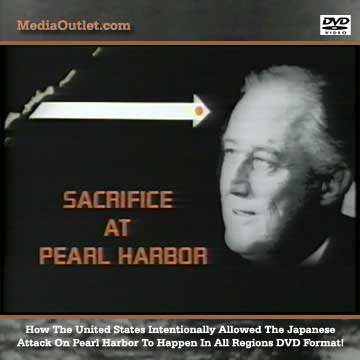
July 26, 1941: World War II: The Pacific
War (The Asia-Pacific War, The Pacific Theater Of World War II):
The Asiatic-Pacific Theater: The South-East Asian Theater Of World
War II: French Indochina in World War II: International Trade
(World Trade): Economic Sanctions (Embargoes): The ABCD Line
(Japanese: Ebishidi Rain) (The American-British-Chinese-Dutch
Line) (The ABCD Encirclement [Japanese: Ebishidi Hoijin]) (The
American-British-Chinese-Dutch Encirclement): The American Seizure
Of Japanese Assets: -- In a political and economic move that will
precipitate the outbreak of The Asia-Pacific War, President
Franklin Roosevelt, in response to Japan's July 24 moving its
troops through Southeast Asia to strengthen its invasion of China
-- particularly its occupation of Cam Ranh naval base in the south
of Vietnam, 800 miles from the Philippines, where Americans had
troops, and close to the British base at Singapore -- seizes all
Japanese assets in the United States in retaliation for the
Japanese occupation of French Indo-China; the next day, Japanese
troops stationed in Tonkin occupied the southern portion of French
Indochina. Given that France had long occupied parts of the
region, and Germany, a Japanese ally, now controlled most of
France through Petain's puppet government, France "agreed"
to the occupation of its Indo-China colonies. Britain and the
Dutch East Indies followed America's lead, and likewise froze
Japanese assets in their countries, with the result that Japan
lost access to three-fourths of its overseas trade and 88 percent
of its imported oil. It was the blocking of Japan's access to oil
that was the most urgent problem from the Japanese perspective,
and the embargoing countries, knowing this would be Japan's
perspective, decided this embargo of oil would be the most
effective means of pressuring Japan; Japan's oil reserves were
only sufficient to last three years, and only half that time if it
went to war and consumed fuel at a more frenzied pace. Japan's
immediate response was to occupy Saigon, again with Vichy France's
acquiescence. If Japan could gain control of Southeast Asia,
including Malaya, it could also control the region's rubber and
tin production -- a serious blow to the West, which imported such
materials from the East. Japan was now faced with a dilemma: back
off of its occupation of Southeast Asia and hope the oil embargo
would be eased -- or seize the oil and further antagonize the
West, even into war; it was the latter choice that Japan chose, as
a number of American political and military leaders secretly hoped
it would in order to precipitate a war they saw as inevitable. The
ABCD Line was a series of embargoes against the Empire of Japan by
foreign nations, including America, Britain, China, and the Dutch.
In 1940, in an effort to discourage Japanese militarism, these
nations and others stopped selling iron ore, steel and oil to
Japan, denying it the raw materials needed to continue its
activities in China and French Indochina. In Japan, the government
and nationalists viewed these embargoes as acts of aggression;
imported oil made up about 80% of domestic consumption, without
which Japan's economy, let alone its military, would grind to a
halt. The Japanese media, influenced by military propagandists,
began to refer to the embargoes by the terms "ABCD
("American-British-Chinese-Dutch") Encirclement"
and "ABCD Line". Faced with the possibility of economic
collapse and forced withdrawal from its recent conquests, the
Japanese Imperial General Headquarters began planning for a war
with the Western powers in April 1941. This culminated in the
Japanese invasion of Malaya and Thailand, and the bombing of Pearl
Harbor in December 1941. On Sale Until Midnight Tonight PT!
https://store.earthstation1.com/sacrifice-at-pearl-harbor-dvd-us-let-attack-happen.html
Today's
EarthStation1.com 15% (Or More!) Off Commemorative Memorial Title:
Summer Of The Bomb: Why US Really Nuked Japan DVD, Download, USB
Drive
Today, July 26, 2026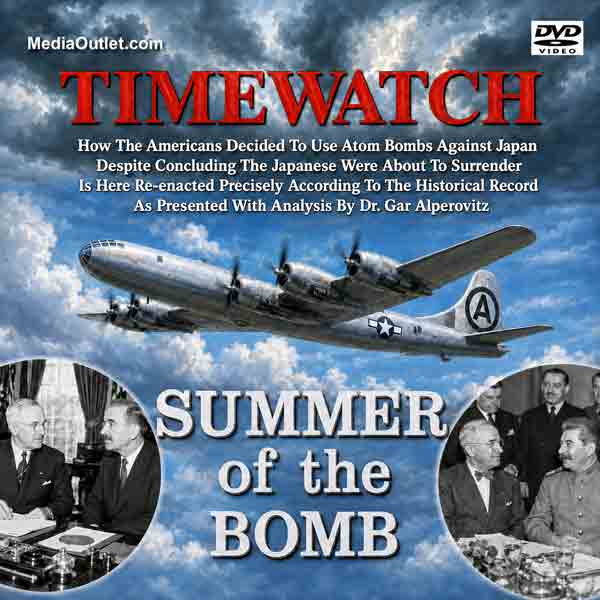
July 26, 1945: The European Civil War:
World War II: The Second European War (The European Theater Of
World War II): World War II Conferences: The Potsdam Conference
(July 17 - August 2, 1945) (German: Potsdamer Konferenz; Soviet
Union: The Berlin Conference Of The Three Heads Of Government Of
The USSR, USA and UK): The Potsdam Declaration (The Proclamation
Defining Terms For Japanese Surrender): -- At the Potsdam
Conference in Germany, Winston Churchill, Harry Truman and China's
representatives issue a demand for unconditional Japanese
surrender. The Potsdam Declaration, or the Proclamation Defining
Terms for Japanese Surrender, is issued by United States President
Harry S. Truman, United Kingdom Prime Minister Winston Churchill,
and Chairman of the Nationalist Government of China Chiang
Kai-shek, a statement that called for the surrender of all
Japanese armed forces during World War II, and outlined the terms
of surrender for the Empire Of Japan as agreed upon at the Potsdam
Conference. This ultimatum stated that, if Japan did not
surrender, it would face "prompt and utter destruction".
The Japanese, not realizing that these demands were backed up by
the newly invented American atomic bomb, issued an ambiguous
rejection. The Potsdam Declaration declared of its terms for
Japan's surrender that "We will not deviate from them. There
are no alternatives. We shall brook no delay." For Japan, the
terms of the declaration specified: 1) the elimination "for
all time of the authority and influence of those who have deceived
and misled the people of Japan into embarking on world conquest";
2) the occupation of "points in Japanese territory to be
designated by the Allies"; 3) that the "Japanese
sovereignty shall be limited to the islands of Honshu, Hokkaido,
Kyushu, Shikoku, and such minor islands as we determine", as
had been announced in the Cairo Declaration in 1943; 4) that "the
Japanese military forces, after being completely disarmed, shall
be permitted to return to their homes with the opportunity to lead
peaceful and productive lives"; and 5) that "we do not
intend that the Japanese shall be enslaved as a race or destroyed
as a nation, but stern justice shall be meted out to all war
criminals, including those who have visited cruelties upon our
prisoners". On the other hand, the declaration offered that:
1) "The Japanese Government shall remove all obstacles to the
revival and strengthening of democratic tendencies among the
Japanese people. Freedom of speech, of religion, and of thought,
as well as respect for the fundamental human rights shall be
established."; 2) "Japan shall be permitted to maintain
such industries as will sustain her economy and permit the
exaction of just reparations in kind, but not those which would
enable her to rearm for war. To this end, access to, as
distinguished from control of, raw materials shall be permitted.
Eventual Japanese participation in world trade relations shall be
permitted."; and 3) "The occupying forces of the Allies
shall be withdrawn from Japan as soon as these objectives have
been accomplished and there has been established, in accordance
with the freely expressed will of the Japanese people, a
peacefully inclined and responsible government.". The mention
of "unconditional surrender" came at the end of the
declaration: "We call upon the government of Japan to
proclaim now the unconditional surrender of all Japanese armed
forces, and to provide proper and adequate assurances of their
good faith in such action. The alternative for Japan is prompt and
utter destruction." The Declaration was released to the press
in Potsdam on the evening of July 26 and simultaneously
transmitted to the Office of War Information (OWI) in Washington.
By 5 p.m. Washington time, OWI's West Coast transmitters, aimed at
the Japanese home islands, were broadcasting the text in English,
and two hours later began broadcasting it in Japanese.
Simultaneously, American bombers dropped over 3 million leaflets
describing the declaration over Japan. The Declaration was never
transmitted to the Japanese government through diplomatic
channels. Although picking up enemy propaganda leaflets and
listening to foreign radio broadcasts (in Japan) was illegal, the
American propaganda efforts were successful in making the key
points of the declaration known to most Japanese. The terms of the
declaration were hotly debated within the Japanese government.
Upon receiving the declaration, Foreign Minister Shigenori Togo
hurriedly met with Prime Minister Kantaro Suzuki and Cabinet
Secretary Hisatsune Sakomizu. Sakomizu recalled that all felt the
declaration must be accepted. Despite being sympathetic to
accepting the terms, Togo felt it was vague concerning the
eventual form of government for Japan, disarmament, and the fate
of accused war criminals, and still had hope that the Soviet Union
would agree to mediate negotiations with the Western Allies to
obtain clarifications and revisions of the declaration's terms.
Shortly afterwards, Togo met with Emperor Hirohito, and advised
him to treat the declaration with the utmost circumspection, but
that a reply should be postponed until the Soviet response to the
Japanese request to mediate peace. Hirohito stated that the
declaration was "acceptable in principle". Meanwhile,
the Supreme Council for the Direction of the War met the same day
to discuss the declaration. War Minister Korechika Anami, General
Yoshijiro Umezu, and Admiral Teijiro Toyoda opposed accepting the
declaration, arguing that the terms were "too dishonorable",
and advised that the Japanese government openly reject it. Suzuki,
Togo, and Admiral Mitsumasa Yonai leaned towards accepting it, but
agreed that clarification was needed over the status of the
Emperor. Togo's suggestion that the government not respond until
it received the Soviet response was accepted. At a press
conference with the Japanese press in Tokyo, Suzuki stated that
the Japanese policy towards the declaration would be one of
"mokusatsu", which the United States interpreted to mean
"to kill with silence", in other words "to ignore",
leading to a swift decision by the Allies to carry out the threat
of destruction. However, the word can also mean "no comment",
as it was apparently intended in this case to mean. President
Truman and his advisers had mulled over the meaning of mokusatsu
before making a decision. One meaning was a matter of politeness
among the upper classes. An unacceptable offer is made, and the
other person, not wanting to offend the speaker, pretends not to
have heard. The other person realizes his mistake, and makes a
better offer. The other meaning is to view with silent contempt.
The White House decided that the second meaning was intended.
After the war, Prime Minister Suzuki stated that his words were
not meant for international consumption, nor to be taken as an
official message. He had simply tried to speak with strength, to
boost the morale of the troops. Subsequent to the White House
decision, the United States Army Air Forces dropped the first
atomic bomb on the Japanese city of Hiroshima on August 6, 1945,
and then the second atomic bomb on the Japanese city of Nagasaki
three days later on August 9, 1945. These two bombings devastated
the two cities, killing an estimated 129,000-246,000 people and
destroying much of the cities' infrastructure as well as military
bases and war industries in a matter of seconds in a radius that
stretched for more than 1 mile (1.6 kilometers). In a widely
broadcast speech picked up by Japanese news agencies, President
Truman warned that if Japan failed to accept the terms of the
Potsdam Declaration it could "expect a rain of ruin from the
air, the like of which has never been seen on this earth". As
a result, Prime Minister Suzuki felt compelled to meet the
Japanese press, to whom he reiterated his government's commitment
to ignore the Allies' demands and fight on. The extent of the
Allies' demands brought home to the Japanese leaders and people
the extent of the success Japan's enemies had achieved in the war.
Subsequent to the receipt of the Potsdam Declaration, the Japanese
Government attempted to maintain the issue of the Emperor's
administrative prerogative within the Potsdam Declaration through
its surrender offer of August 10, but in the end had to take
comfort with Secretary Of State James F. Byrnes' reply "From
the moment of surrender the authority of the Emperor and the
Japanese Government to rule the state shall be subject to the
Supreme Commander of the Allied powers who will take such steps as
he deems proper to effectuate the surrender terms." Thus, at
1200 JST on August 15, 1945, the Emperor announced his acceptance
of the Potsdam Declaration, which culminated in the surrender
documents signature on board the USS Missouri on September 2,
1945. The radio announcement to the Japanese people was the first
time many of them had actually heard the voice of the Emperor. On
August 9, 1945, Stalin, based on a secret agreement at the
February 1945 Yalta Conference, unilaterally abrogated the USSR's
Neutrality Treaty with Japan on April 13, 1941, and declared war
on Japan on August 9, 1945, beginning the Soviet-Japanese War. The
Japanese Army, which was underequipped and was totally unprepared,
were quickly defeated in Manchukuo (Soviet Invasion Of Manchuria).
The Potsdam Declaration was intended from the start to serve as
the legal basis for handling Japan after the war. Following the
surrender of the Japanese government and the landing of General
McArthur in Japan in September 1945, the Potsdam Declaration
served as the legal basis for occupation reforms. On Sale Until
Midnight Tonight PT!
https://store.earthstation1.com/summer-of-the-bomb-dvd-why-us-nuked-japan.html
Today's
EarthStation1.com 15% (Or More!) Off Commemorative Memorial Title:
Winston Churchill: The Valiant Years TV Series DVD, MP4, USB Drive
Today, July 26, 2026
July 26, 1945: The History Of The United
Kingdom: Governments Of The United Kingdom: Elections And
Referendums In The United Kingdom: The 1945 United Kingdom General
Election: The Premiership Of Winston Churchill: The First
Premiership Of Winston Churchill (1940-1945): -- The Labour Party
wins the United Kingdom General Election by a landslide, removing
Winston Churchill from power in the midst of his attending the
Potsdam Conference generally and on the very day he along with
Harry Truman and China's representatives issue a demand for
unconditional Japanese surrender. The following September, King
George VI offered Churchill The Order Of The Garter. Churchill
responded "How can I accept The Order Of The Garter, when the
people of England have just given me The Order Of The Boot?', and
declined the honor; later, having developed a friendship with
Queen Elizabeth II, he accepted The Order Of the Garter at her
request, and he was knighted as Sir Winston on April 24, 1953. The
1945 United Kingdom General Election was held on July 5, 1945,
with polls in some constituencies delayed until July 12 and in
Nelson and Colne until July 19, because of local wakes weeks (a
holiday period in parts of England and Scotland). The results were
counted and declared on July 26, to allow time to transport the
votes of those serving overseas. The result was an unexpected
landslide victory for Clement Attlee's Labour Party, over Winston
Churchill's Conservatives. It was the first time the Conservatives
had lost the popular vote since the 1906 election; they would not
win it again until 1955. Labour won its first majority government,
and a mandate to implement its postwar reforms. The 10.7% national
swing from the Conservative Party to the Labour Party remains the
largest ever achieved in a British general election. On Sale Until
Midnight Tonight PT!
https://store.earthstation1.com/winston-churchill-the-valiant-years-dvd-set-all-26-shows-7-d267.html
Today's
EarthStation1.com 15% (Or More!) Off Commemorative Memorial Title:
USS Indianapolis: Ship Of Doom Naval Disaster Scandal MP4 Download
DVD
Today, July 26, 2026
July 26, 1945: The European Civil War:
World War II: The Second European War (The European Theater Of
World War II): Nuclear Weapons Programs Of The United States: The
Manhattan Project (Codename: Development Of Substitute Materials):
Nuclear Warfare: American Nuclear Warfare: Little Boy: The
Transportation Voyage Of Little Boy By The USS Indianapolis
(CA-35): -- The United States Navy heavy cruiser USS Indianapolis
arrives at Tinian with parts for the Urananium-235 atomic bomb
"Little Boy". After successfully delivering her cargo to
Tinian, she was torpedoed and sunk by e Imperial Japanese Navy
submarine I-58. Her sinking on July 30, 1945 led to the greatest
single loss of life at sea in the history of the U.S. Navy. Of
1,196 crewmen aboard, approximately 300 went down with the ship.
The remaining 900 faced exposure, dehydration, saltwater
poisoning, and shark attacks while floating with few lifeboats and
almost no food or water. The Navy learned of the sinking when
survivors were spotted four days later by the crew of a PV-1
Ventura on routine patrol. Only 317 survived. On Sale Until
Midnight Tonight PT!
https://store.earthstation1.com/uss-indianapolis-ship-of-doom-naval-disaster-scandal-mp4-download-dv4.html
Today's
EarthStation1.com 15% (Or More!) Off Commemorative Memorial Title:
Secret Intelligence: US Espionage History TV Series DVD MP4 USB
Today, July 26, 2026
July 26, 1908: Intelligence And Security
Agencies: Law Enforcement: Law Enforcement In The United States:
Law Enforcement Agencies: Law Enforcement Agencies In The United
States: Federal Law Enforcement Agencies: The United States
Department Of Justice (DOJ) (The Justice Department): The Federal
Bureau Of Investigation (FBI): The History Of The Federal Bureau
Of Investigation (FBI): The Bureau Of Investigation (BOI, BI): --
United States Attorney General Charles Joseph Bonaparte, American
lawyer and political activist for progressive and liberal causes,
long time activist for the rights of black residents of his city
of Baltimore, Maryland, and a great-nephew of French Emperor
Napoleon, issues an order to immediately create and staff "The
Office Of The Chief Examiner", using Department Of Justice
expense funds to hired thirty-four people, including some veterans
of the Secret Service, to work for the new investigative agency.
The first "Chief" (the title is now known as "Director")
of the new agency, which was ultimately named The Bureau of
Investigation, was Stanley Finch, serving from July 26, 1908 to
April 30, 1912. In 1932, the BOI was renamed the Federal Bureau of
Investigation (FBI), and J. Edgar Hoover served as its director
from 1924 to 1972. In 1896, the National Bureau of Criminal
Identification had been founded in order to provide agencies
across the country with information to identify known criminals.
The 1901 assassination of President William McKinley created a
perception that the United States was under threat from
anarchists. The Departments of Justice and Labor had been keeping
records on anarchists for years, but President Theodore Roosevelt
wanted more power to monitor them. The Justice Department had been
tasked with the regulation of interstate commerce since 1887,
though it lacked the staff to do so. It had made little effort to
relieve its staff shortage until the Oregon land fraud scandal at
the turn of the 20th Century. President Roosevelt instructed
Attorney General Charles Bonaparte to organize an autonomous
investigative service that would report only to the Attorney
General. Bonaparte reached out to other agencies, including the
U.S. Secret Service, for personnel, investigators in particular.
On May 27, 1908, the Congress forbade this use of Treasury
employees by the Justice Department, citing fears that the new
agency would serve as a secret police department. Again at
Roosevelt's urging, Bonaparte moved to organize a formal Bureau of
Investigation, which would then have its own staff of special
agents. The bureau's first official task was visiting and making
surveys of the houses of prostitution in preparation for enforcing
the "White Slave Traffic Act" or Mann Act, passed on
June 25, 1910. In 1932, the bureau was renamed the United States
Bureau of Investigation. The following year, 1933, the BOI was
linked to the Bureau of Prohibition and rechristened the Division
of Investigation (DOI) before finally becoming an independent
service within the Department Of Justice in 1935. In the same
year, its name was officially changed from the Division of
Investigation to the present day Federal Bureau of Investigation,
or FBI. On Sale Until Midnight Tonight PT!
https://store.earthstation1.com/secret-intelligence-us-espionage-history-tv-series-dvd-mp4-us4.html
Today's
EarthStation1.com 15% (Or More!) Off Commemorative Memorial Title:
Harry S. Truman: Days Of Decision + Bonus DVD, MP4 Download, USB
Drive
Today, July 26, 2026
July 26, 1947: The Aftermath Of World War
II: The Cold War: The Cold War (1947-1953): Intelligence And
Security Agencies: The United States Military (The United States
Armed Forces): Military Intelligence Of The United States:
National Military Establishment (NME): The United States
Department Of Defense (DoD, USDOD, DOD): The United States
Secretary Of Defense (SecDef): The Central Intelligence Agency
(CIA) (Langley, The Company): The United States National Security
Council (NSC): The National Security Resources Board: The United
States Air Force (USAF): The Joint Chiefs Of Staff (JCS): The
National Security Act Of 1947: -- U.S. President Harry S. Truman
signs the National Security Act Of 1947 into United States law
creating the Central Intelligence Agency, United States Department
of Defense, United States Air Force, Joint Chiefs Of Staff, and
the United States National Security Council. The National Security
Act Of 1947 was a law enacting major restructuring of the United
States government's military and intelligence agencies following
World War II. The majority of the provisions of the Act took
effect on September 18, 1947, the day after the Senate confirmed
James Forrestal as the first Secretary Of Defense. The Act merged
the Department of War (renamed as the Department of the Army) and
the Department of the Navy into the National Military
Establishment (NME), headed by the Secretary Of Defense. It also
created the Department of the Air Force and the United States Air
Force, which separated the Army Air Forces into its own service.
It also protected the Marine Corps as an independent service,
under the Department of the Navy. Aside from the military
reorganization, the act established the National Security Council
and the Central Intelligence Agency, the U.S.'s first peacetime
non-military intelligence agency. On Sale Until Midnight Tonight
PT!
https://store.earthstation1.com/harry-s-truman-days-of-decision-dvd.html
Today's
EarthStation1.com 15% (Or More!) Off Commemorative Memorial Title:
Black Civil Rights Films: African-American History DVD, MP4, USB
Stick
Today, July 26, 2026
July 26, 1948: Civil Rights Movements:
The American Civil Rights Movement (1896-1954) (The Jim Crow Era):
The African American History Of The United States Military: The
Executive Orders Of Harry S. Truman: Executive Order 9981 (EO
9981): -- U.S. President Harry S. Truman signs Executive Order
9981, desegregating the military of the United States. Executive
Order 9981 abolished discrimination "on the basis of race,
color, religion or national origin" in the United States
Armed Forces. This executive order ultimately led to the end
segregation in U.S. services during the conduct of the Korean War
and thereafter. Blacks in the military worked under different
rules that delayed their entry into combat. They had to wait four
years before they could begin combat training while a white
American would begin training within months of being qualified.
The Air Corps was deliberately delaying the training of African
Americans even though it needed more manpower (Survey and
Recommendations). The Women's Army Corps (WAC) reenlistment
program was open to black women, but overseas assignments were
not. In a 1945 survey conducted among 250 white officers and
sergeants who had a colored platoon assigned to their company the
following results were found: 77% of both officers and sergeants
said they had become more favorable towards black soldiers after
having a black platoon assigned to their company (no cases were
found where someone said their attitude towards them had turned
less favorable), 84% of officers and 81% of sergeants thought the
black soldiers had performed very well in combat, only 5% of
officers and 4% of sergeants thought that black infantry soldiers
were not as good as white infantry soldiers, and 73% of officers
and 60% of sergeants thought that black soldiers and white
soldiers got along together very well. According to this
particular survey there are no reasonable grounds for racial
segregation in the armed forces. In 1947, A. Philip Randolph,
along with colleague Grant Reynolds, renewed efforts to end
discrimination in the military, forming the Committee Against Jim
Crow in Military Service and Training, later renamed the League
for Non-Violent Civil Disobedience Against Military Segregation.
Truman's Order expanded on Executive Order 8802 (which prohibited
ethnic or racial discrimination in the nation's defense industry)
by establishing equality of treatment and opportunity in the
military for people of all races, religions, or national origins.
The order also established a committee to investigate and make
recommendations to the civilian leadership of the military to
implement the policy. The order eliminated Montford Point as a
segregated Marine boot camp. It became a satellite facility of
Camp Lejeune. Most of the actual enforcement of the order was
accomplished by President Dwight D. Eisenhower's administration
(1953-1961), including the desegregation of military schools,
hospitals, and bases. The last of the all-black units in the
United States military was abolished in September 1954. Kenneth
Claiborne Royall, Secretary of the Army since 1947, was forced
into retirement in April 1949 for continuing to refuse to
desegregate the army nearly a year after President Truman's Order.
Fifteen years after Truman's order, on July 26, 1963, Secretary Of
Defense Robert McNamara issued Directive 5120.36 encouraging
military commanders to employ their financial resources against
facilities used by soldiers or their families that discriminated
based upon sex or race. In contravention to Truman's executive
order, the United States complied with a non-public request from
the Icelandic government not to station black soldiers on the US
base in Keflavik, Iceland. The United States complied with the
Icelandic request until the 1970s and 1980s when black soldiers
began to be stationed in Iceland. On Sale Until Midnight Tonight
PT!
https://store.earthstation1.com/black-civil-rights-films-africanamerican-history-dvd.html
Today's
EarthStation1.com 15% (Or More!) Off Commemorative Memorial Title:
The War In Korea 2 Part TV Series w/ Kirk Douglas DVD, MP4, USB
Drive
Today, July 26, 2026
July 26, 1950: Korea: The History Of
Korea: The Aftermath Of World War II: The Cold War: The Korean
Conflict: The Cold War (1947-1953): The Cold War In Asia: The
Korean War: War Crimes: Massacres Of The Korean War: The No Gun Ri
Massacre (July 26-29, 1950) (Korean: Nogeunli Yangmin Hagsal
Sageon): -- The four-day mass killing of South Korean refugees by
U.S. military air and ground fire near the village of Nogeun-ri in
central South Korea, The No Gun Ri massacre, begins; it ends when
the US Army 7th Cavalry Regiment is withdrawn. In 2005, a South
Korean government inquest certified the names of 163 dead or
missing and 55 wounded, and added that many other victims' names
were not reported. The No Gun Ri Peace Foundation estimates
250-300 were killed, mostly women and children. The incident was
little-known outside Korea until publication of an Associated
Press (AP) story in 1999 in which veterans of the U.S. Army unit
involved, the 7th Cavalry Regiment, corroborated survivors'
accounts. The AP also uncovered declassified U.S. Army orders to
fire on approaching civilians because of reports of North Korean
infiltration of refugee groups. In 2001, the United States Army
conducted an investigation and, after previously rejecting
survivors' claims, acknowledged the killings, but described the
three-day event as "an unfortunate tragedy inherent to war
and not a deliberate killing". Then-President Bill Clinton
issued a statement of regret, adding the next day that "things
happened which were wrong", but survivors' demands for an
apology and compensation were rejected. South Korean investigators
disagreed with the U.S. report, saying they believed that 7th
Cavalry troops were ordered to fire on the refugees. The
survivors' group called the U.S. report a "whitewash".
The AP later discovered additional archival documents showing that
U.S. commanders ordered troops to "shoot" and "fire
on" civilians at the war front during this period; these
declassified documents had been found but not disclosed by the
Pentagon investigators. Among the undisclosed documents was a
letter from the U.S. ambassador in South Korea stating that the
U.S. military had adopted a theater-wide policy of firing on
approaching refugee groups. Despite demands, the U.S.
investigation was not reopened. Prompted by the exposure of No Gun
Ri, survivors of similar alleged incidents from 1950-51 filed
reports with the Seoul government. In 2008, an investigative
commission said more than 200 cases of alleged large-scale
killings by the U.S. military had been registered, mostly air
attacks. On Sale Until Midnight Tonight PT!
https://store.earthstation1.com/the-war-in-korea-dvd-2-part-tv-series-2-dis22.html
Today's
EarthStation1.com 15% (Or More!) Off Commemorative Memorial Title:
The Occult History Of The Third Reich DVD, Video Download, USB
Drive
Today, July 26, 2026
July 26, 1882: Aesthetics: Performing
Arts: Premieres: Theatre Premieres: Musical Premieres: Opera
Premieres: -- Richard Wagner's opera Parsifal opens at the second
Bayreuth Festspiel (Bayreuth Festival) in the Bayreuth
Festspielhaus (Bayreuth Festival Theatre, now known as the
Richard-Wagner-Festspielhaus) in Bayreuth in northern Bavaria,
Germany. Parsifal (WWV 111) is an opera in three acts loosely
based on Parzival, a 13th-century epic poem of the Arthurian
knight Parzival (Percival) and his quest for the Holy Grail (12th
century), written by Wolfram von Eschenbach, a German knight, poet
and composer, regarded as one of the greatest epic poets of
medieval German literature, who as a Minnesinger also wrote lyric
poetry. Wagner conceived the work in April 1857, but did not
finish it until 25 years later. It was his last completed opera,
and in composing it he took advantage of the particular acoustics
of his Bayreuth Festspielhaus. Parsifal was first produced in
1882. The Bayreuth Festival maintained a monopoly on Parsifal
productions until 1903, when the opera was performed at the
Metropolitan Opera in New York. Wagner described Parsifal not as
an opera, but as Ein Buhnenweihfestspiel ("A Festival Play
for the Consecration of the Stage"). At Bayreuth a tradition
has arisen that audiences do not applaud at the end of the first
act. Wagner's spelling of Parsifal instead of the Parzival that he
had used up to 1877 is informed by one of the theories about the
name Percival, according to which it is of Arabic origin, Parsi
(or Parseh) Fal meaning "pure (or poor) fool". On Sale
Until Midnight Tonight PT!
https://store.earthstation1.com/the-occult-history-of-the-third-reich-4-part-tv-series-2-dv42.html
Today's
EarthStation1.com 15% (Or More!) Off Commemorative Memorial Title:
Aliens Invade Hollywood! 20th Century SF Films MP4 Video Download
DVD
Today, July 26, 2026
July 26, 1928: #BOTD: #HBD! Stanley
Kubrick, American director, producer, screenwriter, filmmaker and
photographer, a major figure of the post-war film industry, widely
regarded as one of the greatest and most influential filmmakers in
the history of cinema (d. March 7, 1999) is #born to a Jewish
family in the Lying-In Hospital in Manhattan, New York City. His
films were nearly all adaptations of novels or short stories,
spanning a number of genres and gaining recognition for their
intense attention to detail, innovative cinematography, extensive
set design, and dark humor. Kubrick taught himself film producing
and directing after graduating from high school. After working as
a photographer for Look magazine in the late 1940s and early
1950s, he began making low-budget short films and made his first
major Hollywood film, The Killing, for United Artists in 1956.
This was followed by two collaborations with Kirk Douglas: the
anti-war film Paths of Glory (1957) and the historical epic film
Spartacus (1960). In 1961, Kubrick left the United States and
settled in England. In 1978, he made his home at Childwickbury
Manor with his wife Christiane, and it became his workplace where
he centralized the writing, research, editing, and management of
his productions. This permitted him almost complete artistic
control over his films, with the rare advantage of financial
support from major Hollywood studios. His first productions in
England were two films with Peter Sellers: the comedy-drama Lolita
(1962) and the Cold War satire Dr. Strangelove (1964). A
perfectionist who assumed direct control over most aspects of his
filmmaking, Kubrick cultivated an expertise in writing, editing,
color grading, promotion, and exhibition. He was famous for the
painstaking care taken in researching his films and staging
scenes. He frequently asked for several dozen retakes of the same
shot in a film, often confusing and frustrating his actors.
Despite the notoriety this provoked, many of Kubrick's films broke
new cinematic ground and are now considered landmarks. The
scientific realism and innovative special effects in his science
fiction epic 2001: A Space Odyssey (1968) were a first in cinema
history; the film earned him his only Academy Award (for Best
Visual Effects) and is regarded as one of the greatest films ever
made. While many of Kubrick's films were controversial and
initially received mixed reviews upon release -- particularly the
brutal A Clockwork Orange (1971), which Kubrick withdrew from
circulation in the UK following a media frenzy -- most were
nominated for Academy Awards, Golden Globes, or BAFTA Awards, and
underwent critical re-evaluations. For the 18th-century period
film Barry Lyndon (1975), Kubrick obtained lenses developed by
Carl Zeiss for NASA to film scenes by candlelight. With the horror
film The Shining (1980), he became one of the first directors to
make use of a Steadicam for stabilized and fluid tracking shots, a
technology vital to his Vietnam War film Full Metal Jacket (1987).
Stanley Kubrick unexpectedly died of a heart attack in his sleep
at his home, Childwickbury Manor, in Hertfordshire, England, aged
70, six days after screening a final cut of Eyes Wide Shut for his
family and the film's stars. His funeral was held five days later
at his home, Childwickbury Manor, in Hertfordshire, England with
only close friends and family in attendance, totaling about 100
people. The media were kept a mile away outside the entrance gate.
Alexander Walker, who attended the funeral, described it as a
"family farewell, ... almost like an English picnic"
with cellists, clarinetists, and singers providing music from many
of Kubrick's favorite classical compositions. Kaddish, the Jewish
prayer typically said by mourners and in other contexts, was
recited. A few of his obituaries mentioned his Jewish background.
Among those who gave eulogies were his brother-in-law Jan Harlan,
Terry Semel, Steven Spielberg, Nicole Kidman, and Tom Cruise. He
was buried next to his favorite tree on the estate. In her book
dedicated to him, his wife Christiane included one of his favorite
quotations of Oscar Wilde: "The tragedy of old age is not
that one is old but that one is young." It has been alleged
that he was murdered after exposing too much about secret
organisations such as that depicted in the film. According to
Roger Avery, the co-writer of Pulp Fiction who also has an
original script of Eyes Wide Shut, the film was centered around an
elite pedophile ring and the final scene was meant to depict Tom
Cruise and Nicole Kidman's characters sending their child to the
ring. During the final scene, you can see them sort of nudge their
daughter towards two older men, let her walk away, and take their
eyes off of her. It was suggested that he died of an induced heart
attack over this ending. On Sale Until Midnight Tonight PT!
https://store.earthstation1.com/aliens-invade-hollywood-20th-century-sf-films-mp4-video-download-dvd.html
Today's
EarthStation1.com 15% (Or More!) Off Commemorative Memorial Title:
Glenn Miller Radio Shows Big Band Swing Jazz MP3 CD Download USB
Drive
Today, July 26, 2026
July 26, 1914: #BOTD: #HBD! Erskine
Hawkins, African American jazz trumpet player and bandleader from
Birmingham, Alabama, known by the monniker "The 20th Century
Gabriel", most remembered for composing the jazz standard
"Tuxedo Junction" (1939) with saxophonist and arranger
Bill Johnson (d. November 11, 1993) is #born Erskine Ramsay
Hawkins in Birmingham, Alabama, named after Alabama industrialist
Erskine Ramsay, who was rewarding parents with savings accounts
for them for doing so, in Birmingham, Alabama. Erskine Hawkins is
most remembered for composing the jazz standard "Tuxedo
Junction" (1939) with saxophonist and arranger Bill Johnson.
The song became a popular hit during World War II, rising to No. 7
nationally (version by the Erskine Hawkins Orchestra) and to No. 1
nationally (version by the Glenn Miller Orchestra). Vocalists who
were featured with Erskine's orchestra include Ida James, Delores
Brown, and Della Reese. Erskine Hawkins died at his home in
Willingboro Township, New Jersey in November 1993, after a brief
visit with his sister in Alabama before he was able to return to
resume playing with his band at the Concord at the age of 79. He
is buried in Elmwood Cemetery, alongside his sister, in
Birmingham, Alabama. On Sale Until Midnight Tonight PT!
https://store.earthstation1.com/glenn-miller-radio-shows-big-band-swing-jazz-mp3-cd-download-usb-driv3.html
Today's
EarthStation1.com 15% (Or More!) Off Commemorative Memorial Title:
WABC Radio Airchecks MP3 Collection 1960s-1980s DVD, MP3 Download,
USB
Today, July 26, 2026
July 26, 1940: #BOTD: #HBD! Dobie Gray,
African American singer, songwriter and record producer whose
musical career spanned soul, country, pop, and musical theater (d.
December 6, 2011) is #born in Simonton, Texas, most likely with
the name Lawrence Darrow Brown, as it's listed in Fort Bend
County;s birth records; other sources suggest he may have been
born Leonard Victor Ainsworth, a name he used on some early
recordings. His hit records included the iconic "The 'In'
Crowd" in 1965, and "Drift Away", which was one of
the biggest hits of 1973, selling over one million copies, and
remains a staple of radio airplay. Gray died of complications from
cancer surgery in Nashville, Tennessee, aged 71. His remains are
buried at Woodlawn Memorial Park And Mausoleum in Nashville,
Tennessee. Upon his passing, he bequeathed 100% of his musical
assets and royalties in trust to benefit St. Jude Children's
Research Hospital and the Tennessee School for the Blind. On Sale
Until Midnight Tonight PT!
https://store.earthstation1.com/wabc-musicradio-shows-mp3-dvd-60s80s-am-360807775.html
Today's
EarthStation1.com 15% (Or More!) Off Commemorative Memorial Title:
25x5: The Continuing Adventures Of The Rolling Stones DVD, MP4,
USB
Today, July 26, 2026
July 26, 1943: #BOTD: #HBD! Mick Jagger,
English singer-songwriter, musician, composer and actor who gained
fame as the lead singer and one of the founding members of the
Rolling Stones, is #born Michael Philip Jagger into a middle-class
family in Dartford, Kent, England to Basil Fanshawe "Joe"
Jagger, a gymnast and physical education teacher who helped
popularise basketball in Britain, and Eva Ensley Mary (nee
Scutts), born in Sydney but of English descent, a hairdresser who
was politically active in the British Conservative Party. Jagger's
younger brother, Chris (born December 19, 1947), is also a
musician, and the two have performed together. Sir Michael Philip
Jagger's career has spanned over five decades, and he has been
described as "one of the most popular and influential
frontmen in the history of rock and roll". His distinctive
voice and performances, along with Keith Richards' guitar style
have been the trademark of the Rolling Stones throughout the
band's career. Jagger gained press notoriety for his admitted drug
use and romantic involvements, and was often portrayed as a
countercultural figure. Jagger was born and grew up in Dartford,
Kent. He studied at the London School of Economics before
abandoning his academic career to join the Rolling Stones. Jagger
has written most of the Rolling Stones' songs together with
Richards, and they continue to collaborate musically. In the late
1960s, Jagger began acting in films (starting with Performance and
Ned Kelly), to a mixed reception. He began a solo career in 1985,
releasing his first album, She's the Boss, and joined the electric
supergroup SuperHeavy in 2009. Relationships with the Stones'
members, particularly Richards, deteriorated during the 1980s, but
Jagger has always found more success with the band than with his
solo and side projects. In 1989, Jagger was inducted into the Rock
and Roll Hall of Fame, and in 2004 into the UK Music Hall of Fame
with the Rolling Stones. As member of the Stones, and as solo
artist, he reached number one on the UK and US singles charts with
13 singles, the Top 10 with 32 singles and the Top 40 with 70
singles. In 2003, he was knighted for his services to popular
music. Jagger has been married (and divorced) once, and has also
had several other relationships. Jagger has eight children with
five women. He also has five grandchildren, and became a
great-grandfather on 19 May 2014, when his daughter Jade's
daughter, Assisi, gave birth to a daughter. Jagger's net worth has
been estimated at 360M USD. On Sale Until Midnight Tonight PT!
https://store.earthstation1.com/25x5-the-continuing-adventures-of-the-rolling-stones-dvd-mp42554.html
Today's
EarthStation1.com 15% (Or More!) Off Commemorative Memorial Title:
Jean Shepherd Radio Shows All Known To Exist DVD, MP3 Download,
USB
Today, July 26, 2026
July 26, 1921: #BOTD: #HBD! Jean
Shepherd, American ranconteur (storyteller) radio and TV host and
personality, author, short story writer, actor and screenwriter
(d. October 16, 1999) is #born Jean Parker Shepherd, Jr on the
south side of Chicago, Illinois. He was often referred to by the
nickname Shep. With a career that spanned decades, Shepherd is
known to modern audiences for the film A Christmas Story (1983),
which he narrated and co-scripted, based on his own
semi-autobiographical stories, which served as the inspiration for
the Television series The Wonder Years (1988-1993); however, it is
his legacy as a radio show host that ranks as his most outstanding
achievement. He died in a hospital in Fort Myers, Florida, in
1999, of natural causes at the age of 78. His remains were
cremated, and his ashes were scattered over the Atlantic Ocean. On
Sale Until Midnight Tonight PT!
https://store.earthstation1.com/complete-jean-shepherd-radio-and-lp-collection-mp3-dvds-2-dis32.html
Today's
EarthStation1.com 15% (Or More!) Off Commemorative Memorial Title:
Brave New World TV Special DVD, MP4 Video Download, USB Flash
Drive
Today, July 26, 2026
July 26, 1894: #BOTD: #HBD! Aldous
Huxley, English novelist, philosopher and mystic (d. November 22,
1963) is #born Aldous Leonard Huxley in Godalming, Surrey,
England, the third son of the writer and schoolmaster Leonard
Huxley, who edited The Cornhill Magazine, and his first wife,
Julia Arnold, who founded Prior's Field School. Aldous Huxley
wrote nearly fifty books, both novels and non-fiction works, as
well as wide-ranging essays, narratives, and poems. Born into the
prominent Huxley family, he graduated from Balliol College, Oxford
with an undergraduate degree in English literature. Early in his
career, he published short stories and poetry and edited the
literary magazine Oxford Poetry, before going on to publish travel
writing, satire, and screenplays. He spent the latter part of his
life in the United States, living in Los Angeles from 1937 until
his death. By the end of his life, Huxley was widely acknowledged
as one of the foremost intellectuals of his time. He was nominated
for the Nobel Prize in Literature seven times and was elected
Companion of Literature by the Royal Society of Literature in
1962. Huxley was a pacifist. He grew interested in philosophical
mysticism and universalism, addressing these subjects with works
such as The Perennial Philosophy (1945), which illustrates
commonalities between Western and Eastern mysticism, and The Doors
Of Perception (1954), which interprets his own psychedelic
experience with mescaline. In his most famous novel Brave New
World (1932) and his final novel Island (1962), he presented his
vision of dystopia and utopia, respectively. Aldous Huxley died of
advanced laryngeal cancer at aged 69 at 5:20 p.m. Los Angeles
time; on his deathbed, unable to speak, Huxley made a written
request to his wife Laura for "LSD, 100 g, intramuscular."
According to her account of his death in This Timeless Moment, she
obliged with an injection at 11:20 a.m. and a second dose an hour
later. He is buried at Compton Village Cemetery in Compton,
Guildford Borough, Surrey, England. On Sale Until Midnight Tonight
PT!
https://store.earthstation1.com/brave-new-world-dvd-aldous-huxley-complete-3-hr-tv-specia3.html
Today's
EarthStation1.com 15% (Or More!) Off Commemorative Memorial Title:
The Day After 1983 Nuclear Holocaust Drama DVD, Download, USB
Drive
Today, July 26, 2026
July 26, 1922: #BOTD: #HBD! Jason
Robards, American stage, film, and television actor (d. December
26, 2000) is #born Jason Nelson Robards Jr. in Chicago, Illinois
into a family of German, English, Welsh, Irish, and Swedish
descent, the son of actor Jason Robards Sr. (1892-1963) and Hope
Maxine Robards (nee Glanville; 1895-1992). Jason Robards a winner
of the Tony Award, two Academy Awards and an Emmy Award. He was
also a United States Navy combat veteran of World War II. He
became famous playing works of American playwright Eugene O'Neill
and regularly performed in O'Neill's works throughout his career.
Robards was cast both in common-man roles and as well-known
historical figures. Jason Robards died of lung cancer in
Bridgeport, Connecticut, aged 78. His remains are buried at Oak
Lawn Cemetery in Fairfield, Connecticut. On Sale Until Midnight
Tonight PT!
https://store.earthstation1.com/the-day-after-1983-dvd-nuclear-holocaust-d1983.html
Today's
EarthStation1.com 15% (Or More!) Off Commemorative Memorial Title:
Fidel Castro Documentaries MP4 Video Download DVD Set
Today, July 26, 2026
July 26, 1953: Cuba: The History Of Cuba:
The Cuban Revolution: The 26th Of July Movement (Spanish:
Movimiento 26 Julio (M 26-7): -- Fidel Castro's revolution, which
he calls The 26th Of July Movement, begins The Cuban Revolution as
he leads a small group of revolutionaries in an attack on the
Moncada Barracks. The attack failed and the surviving
revolutionaries were imprisoned; nevertheless, this attack marks
the beginning of the Cuban Revolution that ultimately drove out
dictator Fulgencio Batista on January 12, 1959. The Moncada
Barracks was a military barracks in Santiago de Cuba, named after
the General Guillermon Moncada, a hero of the Cuban War of
Independence. Although he once declared that Cuba would never
again be ruled by a dictator, Castro's government became a
Communist dictatorship. On Sale Until Midnight Tonight PT!
https://store.earthstation1.com/fidel-castro-documentaries-dvd.html
Today's
EarthStation1.com 15% (Or More!) Off Commemorative Memorial Title:
George Bernard Shaw Biography DVD, Video Download, USB Flash Drive
Today, July 26, 2026
July 26, 1856: #BOTD: #HBD! George
Bernard Shaw, known at his insistence simply as Bernard Shaw,
Irish pamphleteer, playwright, critic, polemicist, and political
activist (d. November 2, 1950) is #born in Portobello, a
lower-middle-class part of Dublin, Ireland. His influence on
Western theatre, culture and politics extended from the 1880s to
his death and beyond. He wrote more than sixty plays, including
major works such as Man and Superman (1902), Pygmalion (1912) and
Saint Joan (1923). With a range incorporating both contemporary
satire and historical allegory, Shaw became the leading dramatist
of his generation, and in 1925 was awarded the Nobel Prize in
Literature. Born in Dublin, Shaw moved to London in 1876, where he
struggled to establish himself as a writer and novelist, and
embarked on a rigorous process of self-education. By the mid-1880s
he had become a respected theatre and music critic. Following a
political awakening, he joined the gradualist Fabian Society and
became its most prominent pamphleteer. Shaw had been writing plays
for years before his first public success, Arms and the Man in
1894. Influenced by Henrik Ibsen, he sought to introduce a new
realism into English-language drama, using his plays as vehicles
to disseminate his political, social and religious ideas. By the
early twentieth century his reputation as a dramatist was secured
with a series of critical and popular successes that included
Major Barbara, The Doctor's Dilemma and Caesar and Cleopatra.
Shaw's expressed views were often contentious; he promoted
eugenics and alphabet reform, and opposed vaccination and
organised religion. He courted unpopularity by denouncing both
sides in the First World War as equally culpable, and although not
a republican, castigated British policy on Ireland in the postwar
period. These stances had no lasting effect on his standing or
productivity as a dramatist; the inter-war years saw a series of
often ambitious plays, which achieved varying degrees of popular
success. In 1938 he provided the screenplay for a filmed version
of Pygmalion for which he received an Academy Award. His appetite
for politics and controversy remained undiminished; by the late
1920s he had largely renounced Fabian Society gradualism and often
wrote and spoke favourably of dictatorships of the right and left
-- he expressed admiration for both Mussolini and Stalin. In the
final decade of his life he made fewer public statements, but
continued to write prolifically until shortly before his death,
having refused all state honours, including the Order of Merit in
1946, at the age of ninety-four of renal failure precipitated by
injuries incurred when falling while pruning a tree at his home in
Ayot St Lawrence, Hertfordshire, England. He was cremated at
Golders Green Crematorium on November 6 1950, and his ashes, mixed
with those of his late wife Charlotte Payne-Townshend, were
scattered along footpaths and around the statue of Saint Joan in
their garden. Since Shaw's death scholarly and critical opinion
has varied about his works, but he has regularly been rated as
second only to Shakespeare among British dramatists; analysts
recognise his extensive influence on generations of
English-language playwrights. The word "Shavian" has
entered the language as encapsulating Shaw's ideas and his means
of expressing them. On Sale Until Midnight Tonight PT!
https://store.earthstation1.com/george-bernard-shaw-dvd-biography-documentary.html
Today's
EarthStation1.com 15% (Or More!) Off Commemorative Memorial Title:
Light In The Dark: Lvov Sewer Holocaust Survivors DVD, Download,
USB
Today, July 26, 2026
July 26-27, 1944: The European Civil War:
World War II: The Second European War (The European Theater Of
World War II): The Eastern Front Of World War II: The Polish
Resistance Movement In World War II: Operation Tempest (Polish:
Akcja Burza, "Operation Storm"): The Lwow Uprising
(Polish: Powstanie Lwowskie): -- After the successful
Lvov-Sandomierz Offensive of July 1944, the Soviet 3rd Guards Tank
Army capture Lviv (Lvov), a major city in western Ukraine, from
the Nazis with significant cooperation from the local Polish
resistance engaged in the Lwow Uprising. Only 300 Jews survived
out of 160,000 living in Lviv prior to occupation, and a
significant number of those survivors did so by hiding in the Lvov
sewers. Soon after the capture of Lviv, the local commanders of
the Polish Armia Krajowa were invited to a meeting with the
commanders of the Red Army. During the meeting, they were
arrested, as it turned out to be a trap set by the Soviet NKVD.
Later, in the winter and spring of 1945, the local NKVD kept
arresting and harassing Poles in Lviv (which according to Soviet
sources on October 1, 1944 still had a clear Polish majority of
66.7%) in an attempt to encourage their emigration from the city.
Those arrested were released only after they had signed papers in
which they agreed to emigrate to Poland, which postwar borders
were to be shifted westwards in accordance with the Yalta
conference settlements. In Yalta, despite Polish objections, the
Allied leaders, Joseph Stalin, Franklin D. Roosevelt and Winston
Churchill decided that Lviv should remain within the borders of
the Soviet Union. On August 16, 1945, a border agreement was
signed in Moscow between the government of the Soviet Union and
the Provisional Government of National Unity installed by the
Soviets in Poland. In the treaty, Polish authorities formally
ceded the prewar eastern part of the country to the Soviet Union,
agreeing to the Polish-Soviet border to be drawn according to the
Curzon Line. Consequently, the agreement was ratified on February
5, 1946. The Lwow Uprising (Polish: Powstanie Lwowskie, Akcja
Burza) was an armed insurrection by the Home Army (Polish: Armia
Krajowa) underground forces of the Polish resistance movement in
World War II against the Nazi German occupation of the city of
Lwow (now Lviv, Ukraine) in the latter stages of World War II. It
began on July 23, 1944 as part of a secret plan to launch the
countrywide all-national uprising codenamed Operation Tempest
ahead of the Soviet advance on the Eastern Front. The Lwow
uprising lasted until July 27. Shortly afterwards, the Polish
troops were disarmed, soldiers merged into the Polish communist
armed forces and officers arrested by the Soviet NKVD. Some were
forced to join the Red Army, others sent to the Gulag camps. The
city itself was occupied by the Soviet Union. On Sale Until
Midnight Tonight PT!
https://store.earthstation1.com/light-in-the-dark-dvd-lvov-sewer-survivors-of-holocaust.html
Today's
EarthStation1.com 15% (Or More!) Off Commemorative Memorial Title:
An Ocean Apart: US-UK Relations TV Series + Profumo Affair MP4 DVD
Set
Today, July 26, 2026
July 26, 1956: The Aftermath Of World War
II: The Cold War: The Cold War (1947-1953): The Decolonization Of
Asia: The Arab-Israeli Conflict: The Suez Crisis (The Second
Arab-Israeli War, The Tripartite Aggression, The Sinai War): The
Aswan Dam (The Aswan High Dam): The Nationalization Of The Suez
Canal: -- Following the World Bank's refusal to fund building the
Aswan Dam, Egyptian leader Gamal Abdel Nasser, in a shockingly
childish, petulant and boorish response to the World Bank's
defense of the legacy of thousands of years of history of his own
country, nationalizes the Suez Canal, sparking international
condemnation, ultimately resulting in The Suez Crisis, or the
Second Arab-Israeli war. On May 16, 1956, Nasser officially
recognized the People's Republic Of China, which angered the U.S.
and Secretary Dulles, a sponsor of the Republic Of China. This
move, coupled with the controversary over the damage the building
of the dam would cause to ancient Egyptian sites, the probable
(and ultimately proven accurate) assessment of the side effects of
having such a damn (silting of the Nile Delta, loss of sediments,
waterlogging, increase in soil salinity, decrease in fish stocks
off the Egyptian Mediterranean coast, etc), and the determination
that the project was beyond Egypt's economic capabilities, caused
Eisenhower to withdraw all American financial aid for the Aswan
Dam project on July 19. The Eisenhower administration believed
that if Nasser were able to secure Soviet economic support for the
high dam, that would be beyond the capacity of the Soviet Union to
support, and in turn would strain Soviet-Egyptian relations.
Eisenhower wrote in March 1956 that "If Egypt finds herself
thus isolated from the rest of the Arab world, and with no ally in
sight except Soviet Russia, she would very quickly get sick of the
prospect and would join us in the search for a just and decent
peace in the region". Dulles told his brother, CIA director
Allen Dulles, "If they [the Soviets] do make this offer we
can make a lot of use of it in propaganda within the satellite
bloc. You don't get bread because you are being squeezed to build
a dam". Finally, the Eisenhower administration had become
very annoyed at Nasser's efforts to play the United States off
against the Soviet Union, and refused to finance the Aswan high
dam. As early as September 1955, when Nasser announced the
purchase of the Soviet military equipment via Czechoslovakia,
Dulles had written that competing for Nasser's favor was probably
going to be "an expensive process", one that Dulles
wanted to avoid as much as possible. The Aswan Dam, or more
specifically since the 1960s, the Aswan High Dam, is the world's
largest embankment dam, which was built across the Nile in Aswan,
Egypt, between 1960 and 1970. Its significance largely eclipsed
the previous Aswan Low Dam initially completed in 1902 downstream.
Based on the success of the Low Dam, then at its maximum
utilization, construction of the High Dam became a key objective
of the government following the Egyptian Revolution of 1952; with
its ability to better control flooding, provide increased water
storage for irrigation and generate hydroelectricity, the dam was
seen as pivotal to Egypt's planned industrialization. Like the
earlier implementation, the High Dam has had a significant effect
on the economy and culture of Egypt. The High Dam has resulted in
protection from floods and droughts, an increase in agricultural
production and employment, electricity production, and improved
navigation that also benefits tourism. Conversely, the dam flooded
a large area, causing the relocation of over 100,000 people. Many
archaeological sites were submerged while others were relocated.
The dam is blamed for coastline erosion, soil salinity, and health
problems. The assessment of the costs and benefits of the dam
remains controversial decades after its completion. On October 29,
1956, in response to Nasser's nationalization of the Suez Canal in
retribution for the World Bank's refusal to fund the building of
the Aswan Dam, Israel invaded the Egyptian Sinai, Britain and
France issued a joint ultimatum to cease fire, which was to all
appearance at the time ignored. On November 5, Britain and France
landed paratroopers along the Suez Canal. The Egyptian forces were
defeated, but they did block the canal to all shipping. It later
became clear that the Israeli invasion and the subsequent
Anglo-French attack had been planned beforehand by the three
countries, and though these three allies had attained a number of
their military objectives, the canal was nevertheless useless. The
duplicity of the Israelis, British and French about the operation,
and their having kept the United States in the dark about their
intentions, did much to undermine efforts towards peace in the
mideast for decades to come. The Suez Crisis, also known as The
Second Arab-Israeli War, and as The Tripartite Aggression in the
Arab world and The Sinai War in Israel, was an invasion of Egypt
in late 1956 by Israel, followed by the United Kingdom and France.
The aims were to regain Western control of the Suez Canal and to
remove Egyptian president Gamal Abdel Nasser, who had just
nationalised the canal. After the fighting had started, heavy
political pressure from the United States and the USSR led to a
withdrawal by the three invaders. The episode humiliated the
United Kingdom and France and strengthened Nasser. U.S. president
Dwight D. Eisenhower had strongly warned Britain not to invade; he
threatened serious damage to the British financial system by
selling the US government's pound sterling bonds. Historians
conclude the crisis "signified the end of Great Britain's
role as one of the world's major powers". The Suez Canal was
closed from October 1956 until March 1957. Israel did fulfill some
of its objectives, such as attaining freedom of navigation through
the Straits of Tiran, which Egypt had blocked to Israeli shipping
since 1950. As a result of the conflict, the United Nations
created the UNEF Peacekeepers to police the Egyptian-Israeli
border. Distinquished British prime minister Anthony Eden resigned
in humiliation in the aftermath of the crisis. Canadian external
affairs minister Lester Pearson won the Nobel Peace Prize for
organizing the United Nations Emergency Force to resolve the Suez
Canal Crisis, and the USSR may have been emboldened to invade
Hungary, in that it had made the condemnation of Soviet actions
very difficult. #NationalizationOfTheSuezCanal #AswanDam
#AswanHighDam #GamalAbdelNasser #WorldBank #SuezCrisis #SuezCanal
#SecondArabIsraeliWar #TripartiteAgression #OperationKadesh
#SinaiWar #Egypt #ModernEgypt #EgyptianHistory
#ModernEgyptianHistory #Israel #ModernIsrael #Sinai
#ModernIsraeliHistory #UK #UKHistory #France #FrenchHistory #MP4
#VideoDownload #DVD On Sale Until Midnight Tonight PT!
https://store.earthstation1.com/an-ocean-apart-7-part-tv-series-4-disc-dvd-s74.html
Today's
EarthStation1.com 15% (Or More!) Off Commemorative Memorial Title:
The Wall Street Crash Of 1929 Documentary Set MP4 Video Download
DVD
Today, July 26, 2026
July 26, 1877: #BOTD: #HBD: Jesse Livermore, American stock trader, considered the pioneer of day trading and was the basis for the main character of Reminiscences Of A Stock Operator, a best-selling book by Edwin Lefevre,in his time one of the richest people in the world, but who at the time of his death by self-inflicted gunshot had liabilities greater than his assets (d. November 28, 1940) is #born Jesse Lauriston Livermore in Shrewsbury, Massachusetts, to a poverty-stricken family. In a time when accurate financial statements were rarely published, getting current stock quotes required a large operation, and market manipulation was rampant, Livermore used what is now known as technical analysis as the basis for his trades. His principles, including the effects of emotion on trading, continue to be studied. Some of Livermore's trades, such as taking short positions before the 1906 San Francisco earthquake and just before the Wall Street Crash Of 1929, are legendary within investing circles. Some observers have regarded Livermore as the greatest trader who ever lived, but others have regarded his legacy as a cautionary tale about the risks of leverage to seek large gains rather than a strategy focused on smaller yet more consistent returns. Jesse Livermore died on Thanksgiving Day just after 5:30 pm of fatal self-inflicted shot with an Automatic Colt Pistol in the cloakroom of The Sherry-Netherland Hotel in Manhattan, where he usually had cocktails. Police found a suicide note of eight small handwritten pages in Livermore's personal, leather-bound notebook. The note was addressed to Livermore's wife, Harriet (whom Livermore nicknamed "Nina") and it read, "My dear Nina: Can't help it. Things have been bad with me. I am tired of fighting. Can't carry on any longer. This is the only way out. I am unworthy of your love. I am a failure. I am truly sorry, but this is the only way out for me. Love Laurie". He is buried at Woodlawn Cemetery in Acton, Massachusetts. On Sale Until Midnight Tonight PT! https://store.earthstation1.com/wastcrof19do.html
Today's
EarthStation1.com 15% (Or More!) Off Commemorative Memorial Title:
Darrow (1991) Kevin Spacey TV Docudrama DVD, Video Download, USB
Drive
Today, July 26, 2026
July 26, 1959: #BOTD: #HBD! Kevin Spacey,
American actor, producer, singer director is #born Kevin Spacey
Fowler in South Orange, New Jersey, to Kathleen Ann (nee Knutson),
a secretary, and Thomas Geoffrey Fowler, a technical writer and
data consultant. His family relocated to Southern California when
he was four years old. Spacey has a sister and an older brother,
Randy Fowler, from whom Spacey is estranged.] His brother has
stated that their father, whom he described as a racist "Nazi
supporter", was sexually and physically abusive, and that
Spacey shut down emotionally and became "very sly and smart"
to avoid beatings. Spacey first addressed the matter in October
2022, saying that his father was "a white supremacist and a
neo-Nazi" who would call him "an F-word that is very
derogatory to the gay community". He stated that this caused
him to become extremely private about his personal life and was
why he did not come out as gay earlier in his life. Spacey had
previously described his father as "a very normal,
middle-class man". Spacey began his career as a stage actor
during the 1980s, obtaining supporting roles in film and
television. He gained critical acclaim in the 1990s, culminating
in an Academy Award for Best Supporting Actor for the neo-noir
crime thriller The Usual Suspects (1995) and an Academy Award for
Best Actor for the midlife crisis-themed drama American Beauty
(1999). Spacey's first roles in film were in Mike Nichols'
Heartburn (1986), and Working Girl (1988). Spacey's other starring
roles have included Glengarry Glen Ross (1992), the comedy-drama
film Swimming with Sharks (1994), the psychological thriller Seven
(1995), the neo-noir crime film L.A. Confidential (1997), the
drama Pay It Forward (2000), the science fiction-mystery film
K-PAX (2001), the musical biopic Beyond the Sea (2004), the
superhero film Superman Returns (2006), and the action film Baby
Driver (2017). In Broadway theatre, Spacey starred in Long Day's
Journey into Night in 1986 alongside Jack Lemmon. In 1991, he won
a Tony Award in 1991 for his role in Lost in Yonkers. He continued
to act in theater receiving his second Tony Award nomination for
The Iceman Cometh in 1999. He then became the artistic director of
the Old Vic theatre in London from 2004 until stepping down in
mid-2015. In 2017, he hosted the 71st Tony Awards. From 2013 to
2017, he played Frank Underwood in the Netflix political drama
series House of Cards, which won him a Golden Globe Award for Best
Actor - Television Series Drama and two consecutive Screen Actors
Guild Awards for Outstanding Performance by a Male Actor in a
Drama Series as well as 5 consecutive Primetime Emmy Award
nominations for Best Actor in a Drama Series. In October 2017,
actor Anthony Rapp accused Spacey of making a sexual advance
toward him in 1986, when Rapp was 14. Numerous other men
subsequently came forward alleging that Spacey had made unwanted
advances and sexually harassed them as well. As a result of the
allegations, Netflix cut ties with Spacey, shelving his film Gore
and removing him from the last season of House of Cards. Spacey's
role as J. Paul Getty in Ridley Scott's film All the Money in the
World (2017) was reshot with actor Christopher Plummer in his
place. In 2018, Billionaire Boys Club (which had been completed
before the allegations surfaced) was released with Spacey's role
unchanged. On Sale Until Midnight Tonight PT!
https://store.earthstation1.com/darrow-1991-dvd-kevin-spacey-tv-m1991.html
Today's
EarthStation1.com 15% (Or More!) Off Commemorative Memorial Title:
Crime Vs Uncle Sam: Kefauver & Army-McCarthy Hearings MP4
Download DVD
Today, July 26, 2026
July 26, 1903: #BOTD: #HBD! Estes
Kefauver, American lawyer and politician from Tennessee (d. August
10, 1963) is #born Carey Estes Kefauver in Madisonville,
Tennessee. A member of the Democratic Party, he served in the U.S.
House of Representatives from 1939 to 1949, and in the Senate from
1949 until his death. In 1950, Kefauver headed the much-publicized
U.S. Senate Special Committee to Investigate Crime in Interstate
Commerce, popularly known as the Kefauver Committee or the
Kefauver hearings, a committee that investigated organized crime.
The committee held hearings in fourteen cities and heard testimony
from over 600 witnesses. Many of the witnesses were high-profile
crime bosses, including such well-known names as Willie Moretti,
Joe Adonis, and Frank Costello, the latter making himself famous
by refusing to allow his face to be filmed during his questioning
and then staging a much-publicized walkout. A number of
politicians also appeared before the committee and saw their
careers ruined. Among them were former Governor Harold G. Hoffman
of New Jersey and Mayor William O'Dwyer of New York City. He twice
sought his party's nomination for President of the United States.
In 1956, he was selected by the Democratic National Convention to
be the running mate of presidential nominee Adlai Stevenson. Still
holding his U.S. Senate seat after the Stevenson-Kefauver ticket
lost to the Eisenhower-Nixon ticket in 1956, Kefauver was named
chair of the U.S. Senate Antitrust and Monopoly Subcommittee in
1957 and served as its chairman until his death. Estes Kefauver
died in his sleep in Bethesda Naval Hospital of a ruptured aortic
aneurysm caused by a "mild" heart attack on the floor of
the Senate two days prior, while attempting to place an antitrust
amendment into a NASA appropriations bill which would have
required companies benefiting financially from the outcome of
research subsidized by NASA, to reimburse NASA for the cost of the
research. After a wake in Washington, D.C., his body was taken to
the First Baptist Church in Madisonville where thousands of
mourners paid their respects. He is interred in a family cemetery
beside his home. On Sale Until Midnight Tonight PT!
https://store.earthstation1.com/crime-vs-uncle-sam-kefauver-syndicate-mccarthy-army-hearings-dvd.html
Today's
EarthStation1.com 15% (Or More!) Off Commemorative Memorial Title:
The Wisdom Of The Dream: Carl Jung A Life Of Dreams DVD, Download,
USB
Today, July 26, 2026
July 26, 1875: #BOTD: #HBD! Carl Jung,
Swiss psychiatrist, psychotherapist and psychoanalyst who founded
analytical psychology, grandson of the eminent doctor, political
activist, medical professor and Freemason Karl Gustav Jung (d.
June 6, 1961) is #born Carl Gustav Jung in Kesswil, in the Swiss
canton of Thurgau, Switzerland. Carl Jung has been influential in
not only psychiatry but also anthropology, archaeology,
literature, philosophy, and religious studies. As a notable
research scientist based at the famous Burgholzli hospital, under
Eugen Bleuler, he came to the attention of the Viennese founder of
psychoanalysis, Sigmund Freud. The two men conducted a lengthy
correspondence and collaborated on an initially joint vision of
human psychology. Freud saw in the younger man the potential heir
he had been seeking to carry on his "new science" of
psychoanalysis. Jung's research and personal vision, however, made
it impossible for him to bend to his older colleague's doctrine
and a schism became inevitable. This division was personally
painful, and was to have historic repercussions lasting well into
the modern day. Jung was also an artist, craftsman and builder as
well as a prolific writer. Many of his works were not published
until after his death and some are still awaiting publication.
Among the central concepts of analytical psychology is
individuation-the lifelong psychological process of
differentiation of the self out of each individual's conscious and
unconscious elements. Jung considered it to be the main task of
human development. He created some of the best known psychological
concepts, including synchronicity, archetypal phenomena, the
collective unconscious, the psychological complex, and
extraversion and introversion. Carl Jung died at Kusnacht, Meilen
in the canton of Zurich in Switzerland at the age of 85 after a
short illness, having been beset by circulatory diseases. He is
buried at Friedhof Kusnacht Dorf in Kusnacht, Bezirk Meilen,
Zurich, Switzerland. On Sale Until Midnight Tonight PT!
https://store.earthstation1.com/the-wisdom-of-the-dream-carl-jung--a-life-of-dreams-dvd.html
Today's
EarthStation1.com 15% (Or More!) Off Commemorative Memorial Title:
The Big Broadcast 1932 Bing Crosby Burns and Allen DVD, Download,
USB
Today, July 26, 2026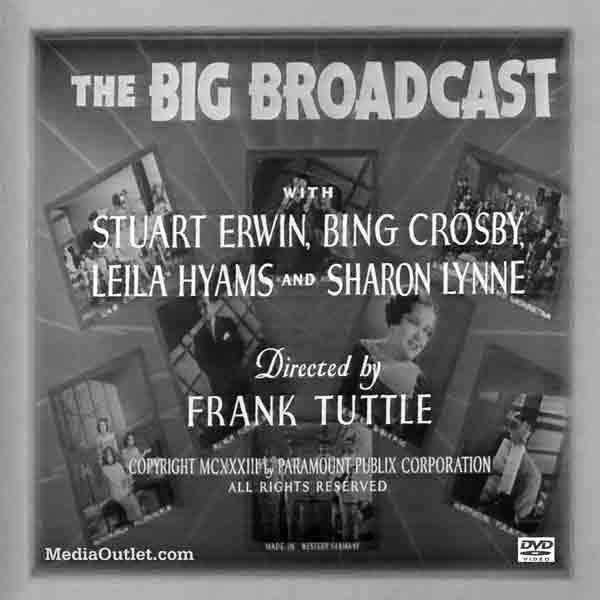
July 26, 1895: #BOTD: #HBD! Gracie Allen,
American comedian who became internationally famous as the zany
partner and comic foil of her straight man husband George Burns
(d. August 27, 1964) is #born Grace Ethel Cecile Rosalie in San
Francisco, California, to George Allen and Margaret Theresa
("Molly") Allen (nee Darragh; later Mrs. Edward
Pidgeon), who were both of Irish Catholic descent. Allen was
honored for contributions to the television industry with a star
on the Hollywood Walk of Fame at 6672 Hollywood Boulevard. In the
early 1930s, Burns and Allen graduated from vaudeville to radio
and became the star attractions of many radio comedy series. In
the early 1930s, Burns and Allen made several short films,
preserving several of their classic vaudeville routines on
celluloid. They appeared in The Big Broadcast (1932) wIth Bing
Crosby, Cab Calloway, Kate Smith, The Mills Brothers and The
Boswell Sisters, and two films with W. C. Fields - International
House (1933) and Six of a Kind. In 1937, Burns and Allen starred
with Fred Astaire in A Damsel in Distress, a musical with an
original score by George Gershwin, which introduced the song "A
Foggy Day". The team of Burns and Allen was inducted into the
Television Hall of Fame in 1988. Gracie Allen died of a heart
attack in Hollywood, California, ostensibly at at the age of 62,
later found to be at the age of 69 according to census records.
Her remains are interred in a crypt at the Freedom Mausoleum in
the Sanctuary of Heritage at Forest Lawn Memorial Park, Glendale,
California. The remains of her husband George Burns were interred
at her side in 1996 when he died at the age of 100. The marker on
the crypt was changed from "Grace Allen Burns - Beloved Wife
And Mother (1895-1964)" to "Gracie Allen (1895-1964) and
George Burns (1896-1996) - Together Again". On Sale Until
Midnight Tonight PT!
https://store.earthstation1.com/the-big-broadcast-dvd-bing-crosby-burns-amp-allen-cab-calloway.html
Today's
EarthStation1.com 15% (Or More!) Off Commemorative Memorial Title:
Television: A History Of Broadcast TV DVD MP4 Download USB Drive
Today, July 26, 2026
July 26, 1909: #BOTD: #HBD! Vivian Vance,
American actress and singer, best known for playing Ethel Mertz on
the sitcom I Love Lucy (1951-1957), for which she won the
Primetime Emmy Award for Outstanding Supporting Actress, among
other accolades (d. August 17, 1979) is #born Vivian Roberta Jones
in Cherryvale, Kansas. When she was six, her family moved to
Independence, Kansas, where she eventually began her dramatic
studies at Independence High School with instructor Anna Ingleman.
Her love of acting clashed with her mother's strict religious
beliefs. "Viv" soon rebelled, often sneaking out of her
bedroom and staying out after curfew. She changed her surname to
Vance and moved to Albuquerque, New Mexico to find acting work,
performing in the very first show at the Albuquerque Little
Theatre in 1930. She appeared there in many other plays, including
This Thing Called Love and The Cradle Song. The local theatre
community helped pay her way to New York City to study under Eva
Le Gallienne. Vivian Vance was godmother to musician John
Sebastian, founder of The Lovin' Spoonful, and was good friends
with his mother, Jane Sebastian. In 1991, she received a star on
the Hollywood Walk of Fame. Vivian Vance died at age 70 of
metastatic breast cancer. After her death, Desi Arnaz said, "It's
bad enough to lose one of the great artists we had the honor and
the pleasure to work with, but it's even harder to reconcile the
loss of one of your best friends". Her remains were cremated,
and her ashes scattered in the Pacific Ocean off the coast of
Marin County. On Sale Until Midnight Tonight PT!
https://store.earthstation1.com/television-1988-tv-documentary-series-8-shows-4-dual-laye198884.html
Today's
EarthStation1.com 15% (Or More!) Off Commemorative Memorial Title:
TV Music & Dance Shows #6 Shindig DVD, Video Download, USB
Flash Drive
Today, July 26, 2026
July 26, 1941: #BOTD: #HBD! Darlene Love,
African American singer and actress, lead singer of the girl group
The Blossoms, who sang lead on "He's a Rebel" and "He's
Sure the Boy I Love," which were credited to the Crystals, is
#born Darlene Wright in Los Angeles, California. She began singing
as a child with her local church choir. In 1962, she began
recording with producer Phil Spector who renamed her Darlene Love.
She was soon a highly sought-after vocalist and worked with many
rock and soul legends of 1960s, including Sam Cooke, Dionne
Warwick, Bill Medley, the Beach Boys, Elvis Presley, Tom Jones and
Sonny and Cher. As a member of The Blossoms, she appeared
regularly on the American musical variety series Shindig!
(1964-1966). As an actress, Love performed in various Broadway
productions. She had a recurring role as Roger Murtaugh's wife in
the Lethal Weapon film series. Ranked among Rolling Stone's 100
Greatest Singers, Love was inducted into the Rock and Roll Hall of
Fame in 2011. Love is featured in the Oscar-winning documentary
film 20 Feet from Stardom (2013), for which she won a Grammy
Award. On Sale Until Midnight Tonight PT!
https://store.earthstation1.com/classic-tv-music-amp-dance-shows-6-shindig-dv6.html
Today's
EarthStation1.com #OnThisDay Commemorative Memorial Title: Manfred
von Richthofen The Red Baron & WWI Aviation DVD, Download, USB
Today, July 26, 2026 July 26, 1918: #DOTD: #RIP: Mick Mannock,
Irish-British flying ace in the Royal Flying Corps and Royal Air
Force during the First World War, one of the most decorated men in
the British Armed Forces, recipient of The Military Cross twice,
one of the rare three-time recipients of The Distinguished Service
Order, and posthumous Victoria Cross recipient (b. May 24, 1887)
#dies aged 31 dogfighting too close to the ground over
Calonne-sur-la-Lys, France, days after warning fellow ace George
McElroy about the hazards of flying low into ground fire, He is
buried at The Arras Flying Services Memorial in Arras, Departement
Du Pas-De-Calais, Nord-Pas-De-Calais, France. Mick Mannock was
born Edward Corringham Mannock in Ballincollig, County Cork,
Ireland to Julia (nee Sullivan) and Edward Mannock, of English,
Irish and Scottish descent. Edward Corringham Mannock VC, DSO and
Two Bars, MC and Bar, was a pioneer of fighter aircraft tactics in
aerial warfare. At his death he had amassed 61 aerial victories,
the fifth highest scoring pilot of the war. Mannock was born in
1887 to an English father, Edward Mannock, and an Irish mother.
Mannock's father served in the British Army and the family moved
to India when Mannock was a small child. Mannock was sickly and
developed several ailments in his formative years. Upon his return
to England he became a fervent supporter of Irish nationalism and
the Irish Home Rule movement but became a member of the
Independent Labour Party where he satisfied his interest in
politics. In 1914 Mannock was working as a telephone engineer in
Turkey. After the Ottoman Empire's entry into the war on the side
of the Central Powers he was interned. Mannock was badly treated
and soon fell ill. Turkish authorities repatriated him to Britain
believing him to be unfit for war service. Mannock recovered and
joined the Royal Engineers and then Royal Army Medical Corps. He
moved services again and in 1916 joined Royal Flying Corps (RFC).
After completing his training he was assigned to No. 40 Squadron
RFC. Mannock went into combat on the Western Front participating
three separate combat tours. After a slow start he began to prove
himself as an exceptional pilot, scoring his first victory on May
7, 1917. By February 1918 Mannock had achieved 16 victories and
was appointed Flight Commander of No. 74 Squadron. He amassed 36
more victories from April 12 to June 17, 1918. After returning
from leave Mannock was appointed commanding officer of No. 85
Squadron in July 1918, and scored nine more victories that month.
On Sale @ 15% Off Discount Till Midnight PT!
https://store.earthstation1.com/red-baron-dvd-world-war-i-aerial-warfare-documentaries.html
July 26, 1918: #DOTD: #RIP: Mick Mannock,
Irish-British flying ace in the Royal Flying Corps and Royal Air
Force during the First World War, one of the most decorated men in
the British Armed Forces, recipient of The Military Cross twice,
one of the rare three-time recipients of The Distinguished Service
Order, and posthumous Victoria Cross recipient (b. May 24, 1887)
#dies aged 31 dogfighting too close to the ground over
Calonne-sur-la-Lys, France, days after warning fellow ace George
McElroy about the hazards of flying low into ground fire, He is
buried at The Arras Flying Services Memorial in Arras, Departement
Du Pas-De-Calais, Nord-Pas-De-Calais, France. Mick Mannock was
born Edward Corringham Mannock in Ballincollig, County Cork,
Ireland to Julia (nee Sullivan) and Edward Mannock, of English,
Irish and Scottish descent. Edward Corringham Mannock VC, DSO and
Two Bars, MC and Bar, was a pioneer of fighter aircraft tactics in
aerial warfare. At his death he had amassed 61 aerial victories,
the fifth highest scoring pilot of the war. Mannock was born in
1887 to an English father, Edward Mannock, and an Irish mother.
Mannock's father served in the British Army and the family moved
to India when Mannock was a small child. Mannock was sickly and
developed several ailments in his formative years. Upon his return
to England he became a fervent supporter of Irish nationalism and
the Irish Home Rule movement but became a member of the
Independent Labour Party where he satisfied his interest in
politics. In 1914 Mannock was working as a telephone engineer in
Turkey. After the Ottoman Empire's entry into the war on the side
of the Central Powers he was interned. Mannock was badly treated
and soon fell ill. Turkish authorities repatriated him to Britain
believing him to be unfit for war service. Mannock recovered and
joined the Royal Engineers and then Royal Army Medical Corps. He
moved services again and in 1916 joined Royal Flying Corps (RFC).
After completing his training he was assigned to No. 40 Squadron
RFC. Mannock went into combat on the Western Front participating
three separate combat tours. After a slow start he began to prove
himself as an exceptional pilot, scoring his first victory on May
7, 1917. By February 1918 Mannock had achieved 16 victories and
was appointed Flight Commander of No. 74 Squadron. He amassed 36
more victories from April 12 to June 17, 1918. After returning
from leave Mannock was appointed commanding officer of No. 85
Squadron in July 1918, and scored nine more victories that month.
On Sale @ 15% Off Discount Till Midnight PT!
https://store.earthstation1.com/red-baron-dvd-world-war-i-aerial-warfare-documentaries.html
Today's
EarthStation1.com #OnThisDay Commemorative Memorial Title: Outer
Space Films 4 Apollo 11 Live TV Coverage DVD, Download, USB
Today, July 26, 2026July 26, 1971: Rocket Launches: The
History Of Rocketry: The History Of Spaceflight: The Aftermath Of
World War II: The Cold War: The Space Age: The Space Race: Space
Programs Of The United States: Human Spaceflight Programs: The
Discovery And Exploration Of The Solar System: Missions To The
Moon: Project Apollo: Apollo 15 (AS-15): -- Apollo 15 is launched
at 13:34:00.6 UTC atop a Saturn V super heavy lift launch vehicle
from the Kennedy Space Center Launch Complex 39 (LC-39) with
Astronauts David Scott, James Irwin and Alfred Worden aboard.
Apollo 15 was the ninth manned mission in the United States'
Apollo program, the fourth to land on the Moon, the first to use a
Lunar Roving Vehicle (LRV) and the eighth successful manned
mission. It was the first of what were termed "J-Missions"
(longer three-day stays using an Extended Lunar Module weighing
2,900 pounds heaver than the initial LM model, with three LEVAs
and a Lunar Roving Vehicle (Apollo 15, Apollo 16, Apollo 17)),
with a greater focus on science than had been possible on previous
missions. It was also the first mission on which the Lunar Roving
Vehicle, or Lunar Rover, was used. A recording of the launch was
included in the Sounds of Earth carried by the Voyager 1 and
Voyager 2 space probes. The mission began on July 26, 1971, and
ended on August 7. At the time, NASA called it the most successful
manned flight ever achieved. Commander David Scott and Lunar
Module Pilot James Irwin spent three days on the Moon, including
18 1/2 hours outside the spacecraft on lunar extra-vehicular
activity (EVA). The mission landed near Hadley Rille, in an area
of the Mare Imbrium called Palus Putredinus (Marsh of Decay). The
crew explored the area using the first lunar rover, which allowed
them to travel much farther from the Lunar Module (LM) than had
been possible on missions without the rover. They collected 77
kilograms (170 lb) of lunar surface material. At the same time,
Command Module Pilot Alfred Worden orbited the Moon, using a
Scientific Instrument Module (SIM) in the Service Module (SM) to
study the lunar surface and environment in great detail with a
panoramic camera, a gamma-ray spectrometer, a mapping camera, a
laser altimeter, a mass spectrometer, and a lunar subsatellite
deployed at the end of Apollo 15's stay in lunar orbit (an Apollo
program first). The mission successfully accomplished its
objectives, but was marred by negative publicity that accompanied
disclosure of the crew carrying unauthorized postage stamps which
they had planned to sell after their return. Ironically, this
mission was one of very few that had been honored with the issue
of a commemorative US stamp, with this first use of a lunar rover
happening one decade after the first Mercury astronaut launch. On
Sale @ 15% Off Discount Till Midnight PT!
https://store.earthstation1.com/outer-space-films-4-apollo-11-live-tv-coverage-2-dual-layer-4112.html
Today's
EarthStation1.com #OnThisDay Commemorative Memorial Title: The
American Diary: US History 1895-1933 TV Series DVD MP4 USB Drive
Today, July 26, 2026July 26, 1934: #DOTD: #RIP: Winsor McCay,
American illustrator, cartoonist, animator and Freemason (b.
September 26, 1867?) #dies in New York City of a cerebral
embolism, aged 63-68. Earlier that day, he complained to his wife
of a severe head-ache. To his horror, he found his right arm-his
drawing arm-was paralyzed. He lost consciousness and was
pronounced dead later that afternoon, with his wife, children, and
son-in-law by his side. He had a Masonic funeral in his home,
attended by his newspaper colleagues, Hearst and his son, and the
Society Of Illustrators, among others. He is buried at the
Cemetery Of The Evergreens in Brooklyn in a family plot. Due to
his lavish life-style, McCay left a smaller fortune than those
around him had expected. By the early 1940s, Maude had used up her
inheritance and sold the house on Voorhies Avenue. When she died
of a heart attack on March 2, 1949, she was living with her
daughter and son-in-law. Son Robert was also careless with his
inheritance, and less successful in art than his father. He worked
for a short time at the Hearst papers, and tried unsuccessfully to
get a job at the Disney studios, before finding a career as
illustrator for Training Aids/Special Services at Fort Ord. Winsor
McCay was born Zenas Winsor McCay in either Spring Lake, Michigan,
or Canada (his birth date, birth year and place of birth
disputed). He is best known for the comic strip Little Nemo
(1905-14; 1924-26) and the animated film Gertie the Dinosaur
(1914). For contractual reasons, he worked under the pen name
Silas on the comic strip Dream of the Rarebit Fiend. From a young
age, McCay was a quick, prolific, and technically dextrous artist.
He started his professional career making posters and performing
for dime museums, and in 1898 began illustrating newspapers and
magazines. In 1903 he joined the New York Herald, where he created
popular comic strips such as Little Sammy Sneeze and Dream of the
Rarebit Fiend. In 1905 his signature strip Little Nemo in
Slumberland debuted-a fantasy strip in an Art Nouveau style about
a young boy and his adventurous dreams. The strip demonstrated
McCay's strong graphic sense and mastery of color and linear
perspective. McCay experimented with the formal elements of the
comic strip page, arranging and sizing panels to increase impact
and enhance the narrative. McCay also produced numerous detailed
editorial cartoons and was a popular performer of chalk talks on
the vaudeville circuit. McCay was an early animation pioneer;
between 1911 and 1921 he self-financed and animated ten films,
some of which survive only as fragments. The first three served in
his vaudeville act; Gertie the Dinosaur was an interactive routine
in which McCay appeared to give orders to a trained dinosaur.
McCay and his assistants worked for twenty-two months on his most
ambitious film, The Sinking of the Lusitania (1918), a patriotic
recreation of the German torpedoing in 1915 of the RMS Lusitania.
Lusitania did not enjoy as much commercial success as the earlier
films, and McCay's later movies attracted little attention. His
animation, vaudeville, and comic strip work was gradually
curtailed as newspaper magnate William Randolph Hearst, his
employer since 1911, expected McCay to devote his energies to
editorial illustrations. In his drawing, McCay made bold,
prodigious use of linear perspective, particularly in detailed
architecture and cityscapes. He textured his editorial cartoons
with copious fine hatching, and made color a central element in
Little Nemo. His comic strip work has influenced generations of
cartoonists and illustrators. The technical level of McCay's
animation-its naturalism, smoothness, and scale-was unmatched
until the work of Fleischer Studios in the late 1920s, followed by
Walt Disney's feature films in the 1930s. He pioneered
inbetweening, the use of registration marks, cycling, and other
animation techniques that were to become standard. On Sale @ 15%
Off Discount Till Midnight PT!
https://store.earthstation1.com/american-diary-complete-us-historytv-series-2-dual-layer-dvd2.html
Today's
EarthStation1.com #OnThisDay Commemorative Memorial Title: Armed
Forces Radio Presents Jubilee! WWII Radio DVD, MP3 Download, USB
Today, July 26, 2026(#JCKaelin here: From September 1945 to
January 1946 - the aftermath months of WWII - the race record "The
Honeydripper" was the greatest hit song on the R & B
charts. It exudes Black American confidence that existed for this
short time after the war, before the fight for civil rights was
joined yet again. But for all that, this record is really, in
addition to all that, one of the greatest records on the planet :D
) AND... the refrain of Joe Liggins' song "Yeah Yeah Yeah"
is INDENTICAL to that of The Beatles' "She Loves You (Yeah
Yeah Yeah)"!) ========= July 26, 1987: #DOTD: #RIP: Joe
Liggins, African American R & B, jazz and blues songwriter,
pianist and vocalist who led Joe Liggins and his Honeydrippers in
the 1940s and 1950s (b. July 9, 1916) #dies of a stroke, in
Lynwood, California, at the age of 71. His burial details are not
publicly disclosed. He was born Theodro Elliott in Seminole,
Oklahoma to Harriett and Elijah Elliott, and took his stepfather's
surname, Liggins, as a child. He apparently dropped the name
Theodro and adopted the names Joseph Christopher during the 1930s,
making his full name Joseph Christopher Liggins, Jr. . His band
appeared often on the Billboard magazine charts. The band's
biggest hit was "The Honeydripper", which topped the US
Billboard R & B chart (at that time called the "Race
Records" chart) for 18 weeks, during the aftermath months of
World War II from September 1945 to January 1946. Joe Liggins'
song "Yeah Yeah Yeah" served as an inspiration for The
Beatles song "She Loves You". Joe Liggins was the older
brother of R & B band leader and guitarist Jimmy Liggins. On
Sale @ 15% Off Discount Till Midnight PT!
https://store.earthstation1.com/armed-forces-radio-presents-jubilee-otr-jazz-music-mp3-dv3.html
Today's
EarthStation1.com #OnThisDay Commemorative Memorial Title:
Offshore Pirate Radio 1960s-1980s MP3s DVD, Audio Download, USB
Drive
Today, July 26, 2026July 26, 1941: #BOTD: #HBD! Brenton Wood,
African American singer and songwriter, known for his three 1967
hit singles, "The Oogum Boogum Song" (peaking at No. 34
on the US Billboard Hot 100), "Gimme Little Sign"
(peaking at No. 9), and "Baby You Got It" (also peaking
at No. 34) (d. January 3, 2025) is #born Alfred Jesse Smith in
Shreveport, Louisiana. His family moved to San Pedro in Los
Angeles, California, when Wood was a child. He attended San Pedro
High School for part of his first year before moving to Compton,
where Brenton became a member of the Compton High School track
team and received several awards for his athletic achievements.
Following his high school graduation, Wood enrolled in East Los
Angeles College. Soon after, he took the stage name Brenton Wood,
possibly inspired by the wealthy Los Angeles enclave of Brentwood
(some sources state that the name is in honor of his "home
county"), with a second possible connection of Bretton Woods.
During this period, his musical interests began to manifest
themselves. He was inspired by Jesse Belvin and Sam Cooke, and he
began cultivating his songwriting skills, also becoming a
competent pianist. Early singles for Brent Records and Wand
Records failed to chart. Wood signed with Double Shot Records, and
his novelty song "The Oogum Boogum Song" reached No. 19
on the US Billboard R & B chart and No. 34 on the Billboard
Hot 100 in the spring of 1967. In Southern California, "The
Oogum Boogum Song" hit the top 10 on KGB-FM and No. 1 on KHJ.
Wood's biggest hit came a few months later, as "Gimme Little
Sign" hit No. 9 on the pop chart, No. 19 on the R & B
charts, No. 2 on KHJ, and No. 8 in the UK Singles Chart; sold over
one million copies; and was awarded a gold disc. The title is not
actually sung in the song; the chorus instead repeats "Give
Me Some Kind of Sign". Wood's "Baby You Got It"
(1967) peaked at No. 34 on the Hot 100 during the last week of
1967 and No. 3 on KHJ on January 31, 1968. His backing band during
the 1960s was the LA-based Kent and The Candidates, which was led
by drummer Kent Sprague. They also recorded several singles for
the Double Shot label. In 1972 Wood formed his own record label
and released, co-produced and co-wrote the Funk Soul classic
"Sticky Boom Boom [Too Cold] Part I and II" with
collaborators George Semper (co-producer, arranger) and Al McKay
(co-writer, performer) of Earth, Wind & Fire fame. Wood
recorded a duet with Shirley Goodman. Wood recorded the single,
"Rainin' Love (You Gotta Feel It)" which was released on
Midget M-101 in 1975. Along with "Bump Me Baby" by
Dooley Silverspoon, "The Mighty Clouds of Joy" by Mighty
Clouds of Joy, "Come on Down (Get Your Head Out of the
Clouds)" by Greg Perry etc., it was a Newcomer Pick. With a
positive review by the magazine, it was predicted to case quite a
stir. His next solo song to reach the charts was "Come Softly
to Me" in 1977. He returned again in 1986 with the album Out
of the Woodwork, which included contemporary re-recordings of his
early hits, along with several new tracks, including the single,
"Soothe Me." His album This Love Is for Real came out in
2001. Among his later appearances was in 2006 on the Los Angeles
public access program Thee Mr. Duran Show, where Wood and his band
performed several of his hit singles. In 2014, he partnered with
William Pilgrim & The All Grows Up for a remake of the song
"Gimme Little Sign" on their album, Epic Endings. In
2019, "The Oogum Boogum Song" was used in a commercial
for Kinder Joy products. In 2024, Brenton Wood announced his
farewell tour Catch You On The Rebound: The Last Tour. Wood was
hospitalized in May 2024, pausing his tour. Brenton Wood died at
his home in Moreno Valley, California at the age of 83. His burial
details are not publicly disclosed. #BrentonWood! #Singers
#Songwriters #AfricanAmericans #SoulMusic #PopMusic
#RhythmAndBlues #MusicSky #MP3 #AudioDownload #DVD On Sale @ 15%
Off Discount Till Midnight PT!
https://store.earthstation1.com/offshore-pirate-radio-2-dual-layer-mp3-dvds-uk-amp-euro23.html
Today's
EarthStation1.com #OnThisDay Commemorative Memorial Title: The
Incas Remembered: Historical Documentary DVD, MP4, USB Stick
Today, July 26, 2026July 26, 1533: #DOTD: #RIP: Atahualpa
[Atawallpa (Quechua), also Atabalica, Atahuallpa, Atabalipa (in
Hispanicized spellings)], the last Inca Emperor (b. 1497, birth
date unknown) #dies when he is executed by the Spanish. He was
buried on August 29, 1533; the exact location of Atahualpa's grave
is unknown, but there is a consensus of opinion that it is at
Malqui-Machay in Ecuador. After several months in fear of an
imminent attack from the Inca Resistance general Ruminahui, the
outnumbered Spanish considered Atahualpa to be too much of a
liability and decided to execute him. Pizarro staged a mock trial
and found Atahualpa guilty of revolting against the Spanish,
practicing idolatry, and murdering his brother Huascar. Atahualpa
was sentenced to death by burning at the stake. He was horrified,
since the Inca believed that the soul would not be able to go on
to the afterlife if the body were burned. Friar Vincente de
Valverde, who had earlier offered his breviary to Atahualpa,
intervened, telling Atahualpa that, if he agreed to convert to
Catholicism, the friar could convince Pizarro to commute the
sentence. Atahualpa agreed to be baptized into the Catholic faith.
He was given the name Francisco Atahualpa in honor of Francisco
Pizarro. On the morning of his death, Atahualpa was interrogated
by his Spanish captors about his birthplace. Atahualpa declared
that his birthplace was in what the Incas called the Kingdom of
Quito, in a place called Caranqui (today located 2 km southeast of
Ibarra, Ecuador). Most chroniclers suggest that Atahualpa was born
in what the Incas used to call the Kingdom of Quito, though other
stories suggest various other birthplaces. In accordance with his
request, he was executed by strangling with a garrote on July 26,
1533. His clothes and some of his skin was burned, and his remains
were given a Christian burial on August 28, 1533. Atahualpa was
succeeded by his brother Tupac Huallpa, and later by another
brother, Manco Inca. After defeating his brother, Atahualpa became
very briefly the last Sapa Inca (sovereign emperor) of the Inca
Empire (Tawantinsuyu) before the Spanish conquest ended his reign.
Before the Inca Emperor Huayna Capac died in Quito in 1524
(possibly due to smallpox, a disease brought by Europeans), he had
appointed his son Ninan Cuyochi as his successor. Ninan died of
the same disease. The Cusquenian nobles named Huascar (another son
of Huayna) as Sapa Inca, and he appointed his brother Atahualpa as
governor of Quito. The Inca Civil War began in 1529 when Huascar
declared war on Atahualpa, for fear that he would try to carry out
a coup d'etat against him. Atahualpa became Inca emperor in May
1532 after he had defeated and imprisoned Huascar and massacred
any pretenders to the throne. The Spaniard Francisco Pizarro
captured Atahualpa in November 1532 and used him to control the
Inca Empire. While imprisoned by the Spaniards, Atahualpa gave
orders to kill Huascar in Jauja, thinking Huascar would use the
Spaniards as allies to regain his throne. The Spanish eventually
executed Atahualpa, effectively ending the empire. A succession of
emperors, who led the Inca resistance against the invading
Spaniards, claimed the title of Sapa Inca as rulers of the
Neo-Inca State, but the empire began to disintegrate after
Atahualpa's death. #Atahualpa #SapaIncas #IncaEmperors #Incas
#IncaEmpire #IncanEmpire #SpanishConquestOfTheIncaEmpire
#ConquestOfPeru #IncaCivilWar #FranciscoPizarro #LastEmperor
#LastEmperors #Murders #FranciscoPizarro #Conquistadors
#SpanishEmpire #SpanishGoldenAge #NewWorld #TheNewWorld
#TheAmericas #Spain #SpanishHistory #HistoryOfSpain #MP4
#VideoDownload #DVD On Sale @ 15% Off Discount Till Midnight PT!
https://store.earthstation1.com/the-incas-remembered-historical-documentary-dvd-mp4-us4.html
Today's
EarthStation1.com #OnThisDay Commemorative Memorial Title: The
American Adventure: TV History Series 1607-1876 DVD MP4 USB Drive
Today, July 26, 2026July 26, 1863: #DOTD: #RIP: Sam Houston,
American general and politician, 7th Governor of Texas (b. March
2, 1793) #dies of pneumonia with his wife, Margaret, by his side
in his Steamboat House home in Huntsville, Texas, Confederate
States Of America, aged 70; his last recorded words were, "Texas.
Texas. Margaret." Houston did everything possible to prevent
secession and war, but his first loyalty was to Texas, and the
South. Houston refused offers of troops from the United States to
keep Texas in the Union and announced on May 10, 1861 that he
would stand with the Confederacy in its war effort. In the midst
of the Civil War, Houston was shunned by many Texas leaders,
though he continued to correspond with Confederate officer Ashbel
Smith and Texas governor Francis Lubbock. His son, Sam Houston,
Jr., served in the Confederate army during the Civil War, but
returned home after being wounded at the April 6-7, 1862 Battle Of
Shiloh. Houston's health suffered a precipitous decline that same
month, and over the next few months he developed a persistent
cough, until in mid-July, Houston was struck with a severe chill
which progressed into the pneumonia that killed him. He is buried
at Oakwood Cemetery in Huntsville, Walker County, Texas. Sam
Houston was born Samuel Houston at Timber Ridge Plantation in
Rockbridge County, Virginia. He was of Scots-Irish descent. After
moving to Tennessee after his father died, he spent time with the
Cherokee Nation, into which he later was adopted as a citizen and
into which he married. He performed military service during the
War Of 1812 and successfully participated in Tennessee politics.
In 1827, Houston was elected Governor of Tennessee as a
Jacksonian. In 1829, he resigned as governor and relocated to the
Arkansas Territory. In 1832, Houston was involved in an
altercation with a U.S. Congressman, followed by a high-profile
trial. Shortly afterwards, he moved west to Coahuila y Tejas, then
a Mexican state, and became a leader of the Texas Revolution. His
victory at the Battle of San Jacinto, fought on April 21, 1836,
the decisive battle of the Texas Revolution between General
Houston's Texian Army General Santa Anna's Mexican army that
lasted just 18 minutes, secured the independence of Texas from
Mexico in one of the shortest decisive battles in modern history.
After the war, Houston became a key figure in Texas and was
elected as the first and third President of the Republic of Texas.
He supported annexation by the United States and he became a U.S.
Senator upon achieving it in 1845, and finally a governor of the
State of Texas in 1859, whereby Houston became the only person to
have become the governor of two different U.S. states through
popular election, as well as the only state governor to have been
a foreign head of state. He was also the only governor within a
future Confederate state to oppose secession, which led to the
outbreak of the American Civil War, and to refuse an oath of
allegiance to the Confederacy, a decision that led to his removal
from office by the Texas secession convention. To avoid bloodshed,
he refused an offer of a Union army to put down the Confederate
rebellion. Instead, he retired to Huntsville, Texas, where he died
before the end of the war. Houston's name has been honored in
numerous ways. He is the namesake of the city of Houston, Texas's
most populous city and the fourth most populous city in the U.S.
Other things named for Sam Houston include Sam Houston State
University, a memorial museum, the USS Sam Houston (SSBN-609)
naval vessel, Fort Sam Houston, Sam Houston National Forest, a
historical park, an elementary school in Lebanon, TN (Sam Houston
Elementary), a prominent roadside statue outside of Huntsville,
and major streets in many Texas cities. On Sale @ 15% Off Discount
Till Midnight PT!
https://store.earthstation1.com/the-american-adventure-series-us-1st-century-4-dv14.html
Today's
EarthStation1.com #OnThisDay Commemorative Memorial Title: The
Last Cause Spanish Civil War TV Series + Bonus MP4 Download DVD
Today, July 26, 2026July 26, 1937: The Interwar Period (The
Interbellum, Between The Wars): The Spanish Civil War: 1937 In The
Spanish Civil War: The Battle Of Brunete: -- The Republicans led
by Jose Miaja are forced by the Nationalists led by Jose Enrique
Varela to retreat from Brunete, a town located on the outskirts of
Madrid, bringing to an end the Battle Of Brunete, fought 15 miles
west of Madrid. It was a Republican attempt to alleviate the
pressure exerted by the Nationalists on the capital and on
Cantabria in the north during the Spanish Civil War. Although
initially successful, it was a pyrrhic victory; the Republicans
were forced to retreat from Brunete and suffered devastating
casualties from the battle. During the final days of the battle
there were clear signs of the morale cracking on the Republican
side, due to both exhaustion and the often terrible losses. Even
among the volunteer International Brigades there were grumbling,
insubordination and outright desertion. Brunete was situated on
the Extremadura road, and its capture would make it harder for the
Nationalists to resupply their forces besieging Madrid, perhaps
even forcing them to withdraw. At the close of the battle, though
the Republicans failed to cut the Extremadura road, they still
held their positions at adjacent municipalities at Villanueva de
la Canada, Quijorna and Villanueva del Pardillo. From this point
of view, both sides were able to claim victory. Nevertheless,
despite heavy Nationalist losses, the Republican army lost much of
its indispensable equipment and many of their best soldiers in the
International Brigades, so that the battle can be seen as a
strategic Nationalist victory. The frenetic conditions at Brunete
for the Nationalists enabled the Germans to acquire favorable
trade concessions because of the effectiveness of the Condor
Legion, who were heavily involved in the battle. The Nationalists
granted most favored nation status to Germany and acquiesced in
sending raw materials to Germany as repayment for the debt
incurred. On Sale @ 15% Off Discount Till Midnight PT!
https://store.earthstation1.com/the-last-cause-spanish-civil-war-all-3-tv-shows-dual-layer-dv3.html
Today's
EarthStation1.com #OnThisDay Commemorative Memorial Title: The
Divided Union: American Civil War TV Series DVD, MP4, USB Drive
Today, July 26, 2026July 26, 1863: The American Civil War
(The Civil War, The War Between The States): The Eastern Theater
Of The American Civil War: Morgan's Raid (The Calico Raid, The
Great Raid of 1863): -- Despite initial successes, Confederate
General and cavalry leader John Hunt Morgan and 360 of his
volunteers of the 2nd Kentucky Cavalry Regiment are thwarted in
their attempts to recross the Ohio River, and are eventually
intercepted by Union gunboats and forced to surrender what
remained of his command to Union forces at Salineville in
northeastern Ohio, near the Pennsylvania border. Morgan and other
senior officers were kept in the Ohio state penitentiary, but they
tunneled their way out and took a train to Cincinnati, where they
crossed the Ohio River to safety. Morgan's Raid was a diversionary
incursion by Confederate cavalry into the northern (Union) states
of Indiana, Kentucky, Ohio and, briefly, West Virginia, during the
American Civil War. The raid took place from June 11-July 26,
1863, and is named for the commander of the Confederates, Brig.
Gen. John Hunt Morgan. Although it caused temporary alarm in the
North, the raid was ultimately classed as a failure. The raid
covered more than 1,000 miles (1,600 km), beginning in Tennessee
and ending in northern Ohio, taking hundreds of prisoners. It
coincided with the Vicksburg Campaign and the Gettysburg Campaign,
and it was meant to draw U.S. troops away from these fronts by
frightening the North into demanding their troops return home;
instead, it gained no tactical advantage for the Confederacy,
while the loss of his regiment proved a serious setback. Though
Morgan escaped from his Union prison, his credibility due to his
insubordination was low, and he was restricted to minor
operations. He was killed at Greeneville, Tennessee, in September
1864. Morgan was the brother-in-law of Confederate general A. P.
Hill. On Sale @ 15% Off Discount Till Midnight PT!
https://store.earthstation1.com/the-divided-union-american-civil-war-tv-series-3-dual-layer-dvd3.html
Today's
EarthStation1.com #OnThisDay Commemorative Memorial Title:
Campaigning And The Presidency MP3 Set CD, Download, USB Flash
Drive
Today, July 26, 2026July 26, 1925: #DOTD: #RIP: William
Jennings Bryan, American orator and politician from Nebraska (b.
March 19, 1860) #dies in his sleep of apoplexy (hemorrhagic
stroke) in Dayton, Tennessee aged 65, five days after the
conclusion of the Scopes Trial, which he won. Bryan's body was
transported by rail from Dayton to Washington, D.C. He is buried
at Arlington National Cemetery, with an epitaph that read,
"Statesman, yet Friend to Truth! Of Soul Sincere, in Action
Faithful, and in Honor Clear", and on the other side "He
Kept the Faith". William Jennings Bryan was born in Salem,
Illinois to Silas Lillard Bryan and Mariah Elizabeth (Jennings)
Bryan. Beginning in 1896, he emerged as a dominant force in the
Democratic Party, standing three times as the party's nominee for
President of the United States. He also served in the United
States House Of Representatives and as the United States Secretary
Of State under Woodrow Wilson. Because of his faith in the wisdom
of the common people, he was often called "The Great
Commoner". He won election to the U.S. House of
Representatives in the 1890 elections, serving two terms before
his defeat in the 1894 Senate elections. At the 1896 Democratic
National Convention, Bryan delivered his "Cross Of Gold
speech" which attacked the gold standard and the eastern
moneyed interests, electrifying the delegates by declaring "You
shall not press down upon the brow of labor this crown of thorns.
You shall not crucify mankind upon a cross of gold!". He
advocated a "free silver" monetary standard through
unlimited coinage of silver rather than the gold standard. In a
repudiation of incumbent President Grover Cleveland and his
conservative Bourbon Democrats, the Democratic convention
nominated Bryan for president, making Bryan the youngest major
party presidential nominee in U.S. history. He was 36 years old at
the time, one year older than the minimum age limit of 35. A
supporter of bimetallism, Bryan was also nominated by the Populist
Party and the Silver Republican Party. In the intensely fought
1896 presidential election, Republican nominee William McKinley
emerged triumphant. With over 500 speeches in 1896, Bryan invented
the national stumping tour in an era when other presidential
candidates stayed home. Bryan retained control of the Democratic
Party and won the presidential nomination again in 1900. In the
aftermath of the Spanish-American War, Bryan became a fierce
opponent of American imperialism, and much of the campaign
centered on that issue. In the election, McKinley again defeated
Bryan, winning several Western states that Bryan had won in 1896.
Bryan's influence in the party weakened after the 1900 election,
and the Democrats nominated the conservative Alton B. Parker in
the 1904 presidential election. Bryan won his party's nomination
in the 1908 presidential election, but he was defeated by William
Howard Taft. After the Democrats won the presidency in the 1912
election, Wilson rewarded Bryan's support with the important
cabinet position of Secretary Of State. After the Lusitania was
torpedoed by a German submarine in 1915, Wilson made strong
demands on Germany that Bryan disagreed with, as he hoped to avoid
entering World War I. Bryan resigned from office in 1915, and the
United States entered the war two years later. Bryan remained
active in public life, supporting Wilson's re-election and
advocating for the enactment of Prohibition. He also became a
promoter of Florida real estate, contributing to the Florida land
boom of the 1920s. He opposed Darwinism on religious and
humanitarian grounds, most famously at the Scopes Trial in 1925 in
Tennessee. On Sale @ 15% Off Discount Till Midnight PT!
https://store.earthstation1.com/campaigning-and-the-presidency-historical-audio-mp3-c3.html
Today's
EarthStation1.com #OnThisDay Commemorative Memorial Title: 1960
Democratic & Republican National Conventions DVD MP4 USB Drive
Today, July 26, 2026July 25-28, 1960: Elections: Elections In
The United States: The 1960 United States Presidential Election:
The 1960 United States Republican National Convention: -- The 1960
Republican National Convention continues in Chicago, Illinois,
running from July 25 to July 28, 1960 at the International
Amphitheatre. It was the 14th and most recent time overall that
Chicago hosted the Republican National Convention, more times than
any other city. The convention nominated Vice President Richard M.
Nixon for president and former Senator Henry Cabot Lodge Jr. of
Massachusetts for vice president. On Sale @ 15% Off Discount Till
Midnight PT!
https://store.earthstation1.com/1960-democratic-and-republican-national-conventions1960.html
Today's
EarthStation1.com #OnThisDay Commemorative Memorial Title: That
War In Korea 1964 TV Feature Film Documentary DVD, Download, USB
Today, July 26, 2026July 26, 1993: #DOTD: #RIP: Matthew
Ridgway, American general, who served with distinction during
World War II as Commanding General of the 82nd Airborne Division
in action in Sicily, Italy and Normandy, Commanding General of the
newly formed XVIII Airborne Corps in August 1944 during the Battle
Of The Bulge, Operation Varsity and the Western Allied invasion of
Germany, most famous for resurrecting the United Nations (UN) war
effort during the Korean War, 19th Chief Of Staff of the United
States Army (b. March 3, 1895) #dies at his suburban Pittsburgh
home of cardiac arrest, at the age of 98. He is buried at
Arlington National Cemetery, in Arlington, Virginia.] In a
graveside eulogy, Chairman of the Joint Chiefs Of Staff, General
Colin Powell, said: "No soldier ever performed his duty
better than this man. No soldier ever upheld his honor better than
this man. No soldier ever loved his country more than this man
did. Every American soldier owes a debt to this great man."
Matthew Ridgway was born Matthew Bunker Ridgway in Fort Monroe,
Virginia, to Colonel Thomas Ridgway, an artillery officer, and
Ruth Starbuck (Bunker) Ridgway. He lived in various military bases
all throughout his childhood. He later remarked that his "earliest
memories are of guns and marching men, of rising to the sound of
the reveille gun and lying down to sleep at night while the sweet,
sad notes of 'Taps' brought the day officially to an end." As
the commanding general in Korea, he gained the nickname "Tin
Tits" for his habit of wearing hand grenades attached to his
load-bearing equipment at chest level. Photographs however show he
only wore one grenade on one side of his chest; the so-called
"grenade" on the other side was in fact a first-aid
packet. Several historians have credited Ridgway for turning the
war around in favor of the UN side. His long military career was
recognized by the award of the Presidential Medal Of Freedom on
May 12, 1986 by President Ronald Reagan, who stated that: "Heroes
come when they're needed; great men step forward when courage
seems in short supply.". On Sale @ 15% Off Discount Till
Midnight PT!
https://store.earthstation1.com/that-war-in-korea-tv-documentary-feature-film-dvd.html
Today's
EarthStation1.com #OnThisDay Commemorative Memorial Title: The
Mystery Of The Full Moon: Science Psychology Biology Faith MP4 DVD
Today, July 26, 2026July 26, 1984: #DOTD: Ed Gein, also known
as the Butcher Of Plainfield or the Plainfield Ghoul, American
murderer, body snatcher and serial killer (b. August 27, 1906)
#dies at the Mendota Mental Health Institute due to respiratory
failure secondary to lung cancer at the age of 77. He is buried
next to his family in the Plainfield Cemetery, in a now-unmarked
grave; over the years, souvenir seekers chipped pieces from his
gravestone at the Plainfield Cemetery, until the stone itself was
stolen in 2000. It was recovered in June 2001, near Seattle,
Washington, and was placed in storage at the Waushara County
Sheriff's Department. The gravesite itself is now unmarked, but
not unknown; Gein is interred between his parents and brother in
the cemetery. He was born Edward Theodore Gein in La Crosse
County, Wisconsin. Gein's crimes, committed around his hometown of
Plainfield, Wisconsin, gathered widespread notoriety in 1957 after
authorities discovered he had exhumed corpses from local
graveyards and fashioned trophies and keepsakes from their bones
and skin. Gein also confessed to killing two women: tavern owner
Mary Hogan in 1954 and hardware store owner Bernice Worden in
1957. Gein was initially found unfit to stand trial and confined
to a mental health facility. By 1968, h On Sale @ 15% Off Discount
Till Midnight PT!
https://store.earthstation1.com/mysteries-of-the-full-moon-science-biology-psychology-spirituality.html
Today's
EarthStation1.com #OnThisDay Commemorative Memorial Title: Evita
Peron (1981) With Faye Dunaway + Bonus Biography Download Or DVD
Today, July 26, 2026July 26, 1952: #DOTD: Eva Peron, better
known by the nickname Evita, controversial Argentine politician,
activist, actress, and philanthropist who served as First Lady of
Argentina from June 1946 until her death in July 1952 as the wife
of Argentine President Juan Domingo Peron and who became a part of
international popular culture, most famously as the subject of the
musical Evita (1976) (b. May 7, 1919) #dies in Buenos Aires,
Argentina at 8:25 p.m. on a Saturday of cervical cancer, aged 33.
She was given a state funeral, a prerogative generally reserved
for heads of state. Shortly before her death, Eva Peron was given
the title of "Spiritual Leader of the Nation" by the
Argentine Congress. She is buried at the Cementerio De La
Recoleta, Buenos Aires, Argentina. Eva Peron was born nee Maria
Eva Duarte in poverty in the rural village of Los Toldos, in the
Pampas, as the youngest of five children. In 1934, at the age of
15, she moved to the nation's capital of Buenos Aires to pursue a
career as a stage, radio, and film actress. She met Colonel Juan
Peron on January 22, 1944 during a charity event at the Luna Park
Stadium to benefit the victims of an earthquake in San Juan,
Argentina. The two were married the following year. Juan Peron was
elected President of Argentina in June 1946; during the next six
years, Maria Eva Duarte de Peron became powerful within the
pro-Peronist trade unions, primarily for speaking on behalf of
labor rights. She also ran the Ministries of Labor and Health,
founded and ran the charitable Eva Peron Foundation, championed
women's suffrage in Argentina, and founded and ran the nation's
first large-scale female political party, the Female Peronist
Party. In 1951, Eva Peron announced her candidacy for the Peronist
nomination for the office of Vice President of Argentina,
receiving great support from the Peronist political base,
low-income and working-class Argentines who were referred to as
descamisados or "shirtless ones". Opposition from the
nation's military and bourgeoisie, coupled with her declining
health, ultimately forced her to withdraw her candidacy. Cristina
Alvarez Rodriguez has said that Evita has never left the
collective consciousness of Argentines. Cristina Fernandez de
Kirchner, the second woman elected president of Argentina (after
Isabel Peron), claims that women of her generation owe a debt to
Eva for "her example of passion and combativeness". On
Sale @ 15% Off Discount Till Midnight PT!
https://store.earthstation1.com/evita-peron-1981-tv-miniseries-faye-dunaway-mp4-video-downloa19814.html
Today's
EarthStation1.com #OnThisDay Commemorative Memorial Title: Of
Moose And Men: The Rocky And Bullwinkle Story DVD, Download, USB
Today, July 26, 2026July 26, 2017: #DOTD: #RIP: June Foray,
American actress and voice artist (b. September 18, 1917) #dies at
the age of 99, less than two months before her 100th birthday, at
a hospital in Los Angeles, California. She had been in declining
health since an automobile accident in 2015. She is buried at
Westwood Memorial Park in Westwood, Los Angeles County,
California. June Foray was born June Lucille Forer in Springfield,
Massachusetts to Ida (Robinson), a Lithuanian Jew and French
Quebecian, and Morris Forer, a Jewish emigrant from Odessa,
Russian Empire. June Foray was best known as the voice of such
animated characters as Rocky the Flying Squirrel, Lucifer from
Disney's Cinderella, Cindy Lou Who, Jokey Smurf, Granny from the
Warner Bros. cartoons directed by Friz Freleng, Grammi Gummi from
Disney's Adventures of the Gummi Bears series, and Magica De
Spell, among many others Her career encompassed radio, theatrical
shorts, feature films, television, record albums (particularly
with Stan Freberg), video games, talking toys, and other media.
Foray was also one of the early members of ASIFA-Hollywood, the
society devoted to promoting and encouraging animation, and is
credited with the establishment of the Annie Awards, as well as
instrumental to the creation of the Academy Award for Best
Animated Feature in 2001. She has a star on the Hollywood Walk of
Fame honoring her voice work in television. Chuck Jones was quoted
as saying: "June Foray is not the female Mel Blanc. Mel Blanc
was the male June Foray." On Sale @ 15% Off Discount Till
Midnight PT!
https://store.earthstation1.com/of-moose-and-men-the-rocky-amp-bullwinkle-story-dvd.html
Today's
EarthStation1.com #OnThisDay Commemorative Memorial Title: Smokey
Robinson: The Quiet Legend DVD, MP4 Video Download, USB Drive
Today, July 26, 2026July 26, 1992: #DOTD: #RIP: Mary Wells,
African American singer and songwriter known as The Queen Of
Motown, who helped to define the emerging sound of Motown in the
early 1960s (b. May 13, 1943) #dies of cancer in Los Angeles,
California at the age of 49 after she was rushed to the Kenneth
Norris Jr. Cancer Hospital in Los Angeles with pneumonia, her
immune system weakened with the effects of her prior unsuccessful
cancer treatments. After her funeral, which included a eulogy
given by her old friend and former collaborator, Smokey Robinson,
Wells was cremated, and her ashes were laid to rest in Glendale's
Forest Lawn Memorial Park, in a crypt owned by her former musical
collaborators the Womack family. Family friend Sam Cooke is buried
in The Garden Of Honor, about 850 feet to the west. She was born
Mary Esther Wells near Detroit's Wayne State University. Along
with The Supremes, The Miracles, The Temptations, Martha Reeves
and the Vandellas, and the Four Tops, Wells was part of the charge
in black music onto radio stations and record shelves of
mainstream America, bridging the color lines in music at the time.
With a string of hit singles composed mainly by Smokey Robinson,
including "The One Who Really Loves You", "Two
Lovers", and the Grammy-nominated "You Beat Me to the
Punch", all in 1962, plus her signature hit, "My Guy"
(1964), she became recognized as "The Queen of Motown"
until she departured the company in 1964 over a contract dispute
at the height of her success. On Sale @ 15% Off Discount Till
Midnight PT!
https://store.earthstation1.com/smokey-robinson-the-quiet-legend-dvd-mp4-download-usb-driv4.html
Today's
EarthStation1.com #OnThisDay Commemorative Memorial Title: The
Golden Age Of Comedy 5 Album Set CD, MP3, USB Stick
Today, July 26, 2026July 26, 1982: #DOTD: #RIP: Betty Walker,
Jewish-American actress and comedian who performed primarily
during the 1950s and 1960s (b. August 7, 1928) #dies at her
Manhattan home aged 54, having been ill for some time, suffering
from a variety of ailments. Funeral services were held on July 28
at Parkside Chapel, 79th Street and Columbus Avenue. Her burial
details are not publicly disclosed. She was born Edith Seeman in
Elizabeth, New Jersey to Latvian Jewish immigrants. Her first
major acting role was on the sitcom The Goldbergs, where at 21
years of age she played Mrs. Kramer, Molly's loud-mouthed, nosy
neighbor. She acted in the original cast of Paddy Chayefsky's play
"Middle of the Night", which first premiered in 1956,
and she reprised her role as the Widow for the film adaptation
three years later. In addition to performing in Paddy Chayefsky's
plays "The Passion of Josef D" and "Middle of the
Night" with Edward G. Robinson, she acted in a number of
other television dramas, such as Decoy, Playhouse 90, and The
Doctors, and in Susan Slade's "Ready When You Are, C.B.!"
with Julie Harris and Estelle Parsons. In movies she was seen in
"Molly", "Exodus" and the screen version of
"Middle of the Night". As a popular comedian of the
1950s and 1960s, Walker was best known for her "telephone
act" wherein she delivered a monologue to her unseen friend
"Ceil" at the other end of the line. The humor of this
act draws upon the Jewish stereotypes of the "overbearing
mother" which had gained popularity originally in Jewish joke
books after World War II. While the "Jewish mother"
trope gained popularity in newer venues such as on television, in
print, and on comedy albums, it is notable that she was often
personified in these mediums through her "son's vision"
of her. It is notable, then, that Walker actively assumed these
traits, which gave her transgressive mimetic power over them. She
also recorded comedy record albums, including "Aunt Lena and
Her Entire Family" and "Hello Ceil". Walker made
guest appearances on The Tonight Show Starring Johnny Carson, The
Merv Griffin Show, The Mike Douglas Show and The Steve Allen Show,
where she often performed her monologue to "Ceil." On
Sale @ 15% Off Discount Till Midnight PT!
https://store.earthstation1.com/golden-age-of-comedy-narrated-by-george-burns-5-album-set-mp3-53.html
Today's
EarthStation1.com #OnThisDay Commemorative Memorial Title: My
Wicked, Wicked Ways The Legend Of Errol Flynn Docudrama DVD MP4
USB
Today, July 26, 2026July 26, 2020: #DOTD: #RIP: Olivia de
Havilland, British and American actress and beauty (b. July 1,
1916) #dies of natural causes in her sleep at her home in Paris on
July 26, 2020, at the age of 104. Her funeral was held on August
1, 2020, at the American Cathedral in Paris. After cremation her
ashes were placed in the crematorium-columbarium of the cemetery
of Pere-Lachaise; the urn containing them will later be
transferred to a family burial place on the British island of
Guernsey in the English Channel. Dame Olivia Mary de Havilland DBE
was born Olivia Mary de Havilland in Tokyo, Japan into the De
Havilland family, an Anglo-Norman family belonging to landed
gentry that originated from mainland Normandy and settled in
British channel island of Guernsey in the Middle Ages. Her major
works of her cinematic career spanned from 1935 to 1988. She
appeared in 49 feature films and was one of the leading actors of
her time. At the time of her death in 2020 at age 104, she was the
oldest living and earliest surviving Academy Award winner and was
widely considered as being the last surviving major star from the
Golden Age of Hollywood cinema. Her younger sister was
Oscar-winning actress Joan Fontaine. De Havilland first came to
prominence with Errol Flynn as a screen couple in adventure films
such as Captain Blood (1935) and The Adventures of Robin Hood
(1938). One of her best-known roles is that of Melanie Hamilton in
Gone With The Wind (1939), for which she received her first of
five Oscar nominations, the only one for Best Supporting Actress.
De Havilland departed from ingenue roles in the 1940s and later
distinguished herself for performances in Hold Back the Dawn
(1941), To Each His Own (1946), The Snake Pit (1948), and The
Heiress (1949), receiving nominations for Best Actress for each
and winning for To Each His Own and The Heiress. She was also
successful in work on stage and television. De Havilland lived in
Paris from the 1950s and received honors such as the National
Medal of the Arts, the Legion d'honneur, and the appointment to
Dame Commander of the Order of the British Empire at the age of
101. In addition to her film career, de Havilland continued her
work in the theatre, appearing three times on Broadway, in Romeo
and Juliet (1951), Candida (1952), and A Gift of Time (1962). She
also worked in television, appearing in the successful miniseries
Roots: The Next Generations (1979) and Anastasia: The Mystery of
Anna (1986), for which she received a Primetime Emmy Award
nomination and won the Golden Globe Award for Best Supporting
Actress in a Television Movie or Series. During her film career,
de Havilland also collected two New York Film Critics Circle
Awards, the National Board of Review Award for Best Actress, and
the Venice Film Festival Volpi Cup. For her contributions to the
motion picture industry, she received a star on the Hollywood Walk
of Fame. She and her sister remain the only siblings to have won
major acting Academy Awards.
https://store.earthstation1.com/my-wicked-wicked-ways-the-legend-of-errol-flynn-dvd-2-disc2.html